12/18/2020
48th General Assembly of the SCTM - PANEL DISCUSSION: "Potentials and Challenges in the Development of Local Self-Government in the Next Decade"
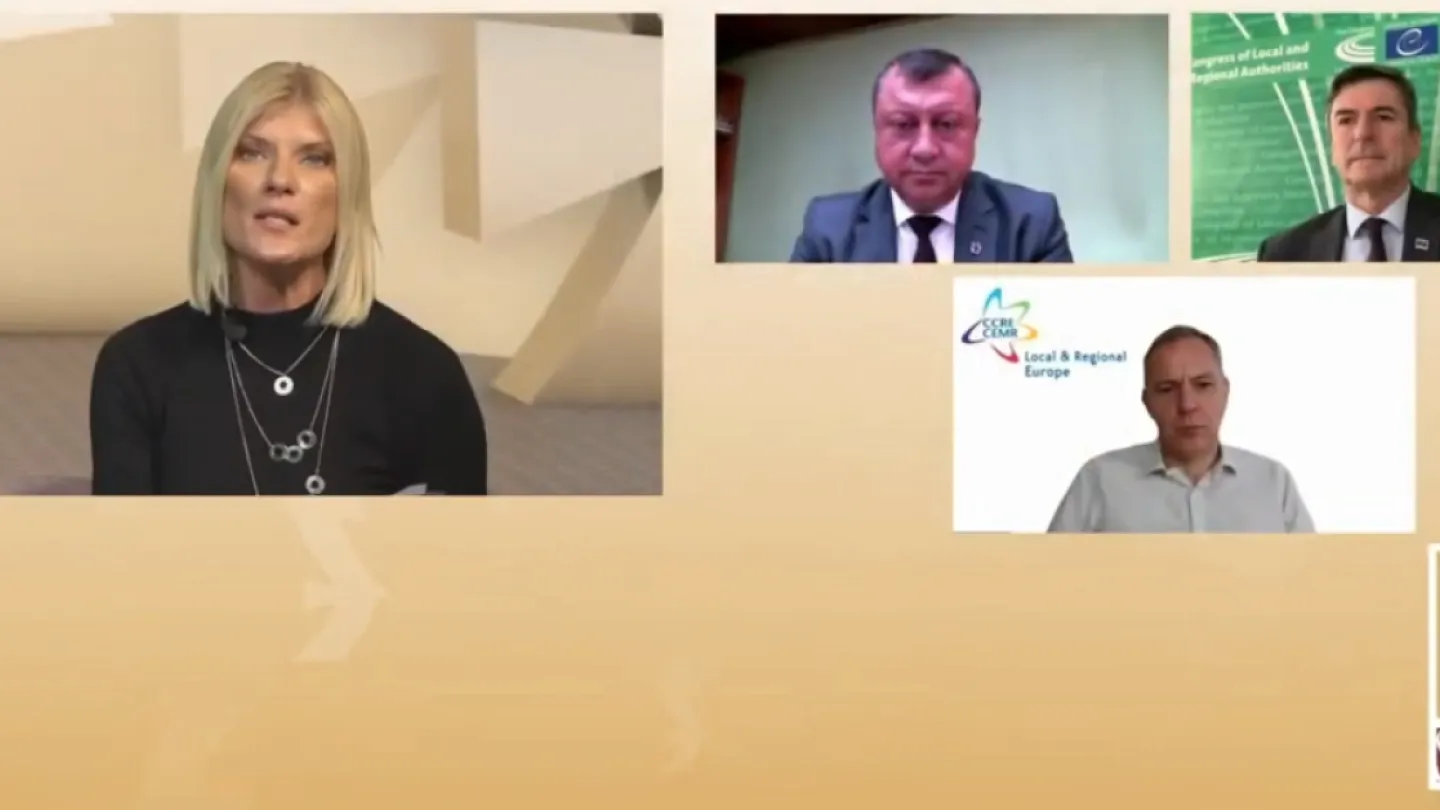
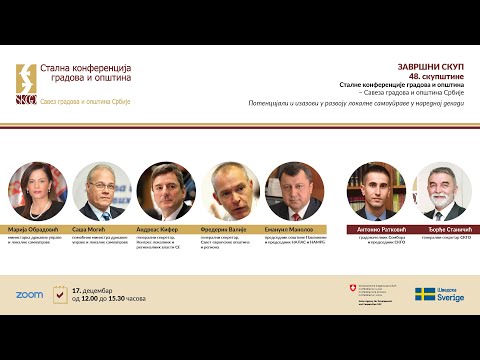
At the panel discussion held within the 48th Assembly of the SCTM, which was attended by representatives of the Ministry, SCTM and foreign institutions, they discussed the dialogue between local and government at the state level, future trends in the work and development of local self-governments, examples of good practices, but also the impact of the covid crisis on development and what is important in the future for the strengthening of cities and municipalities.
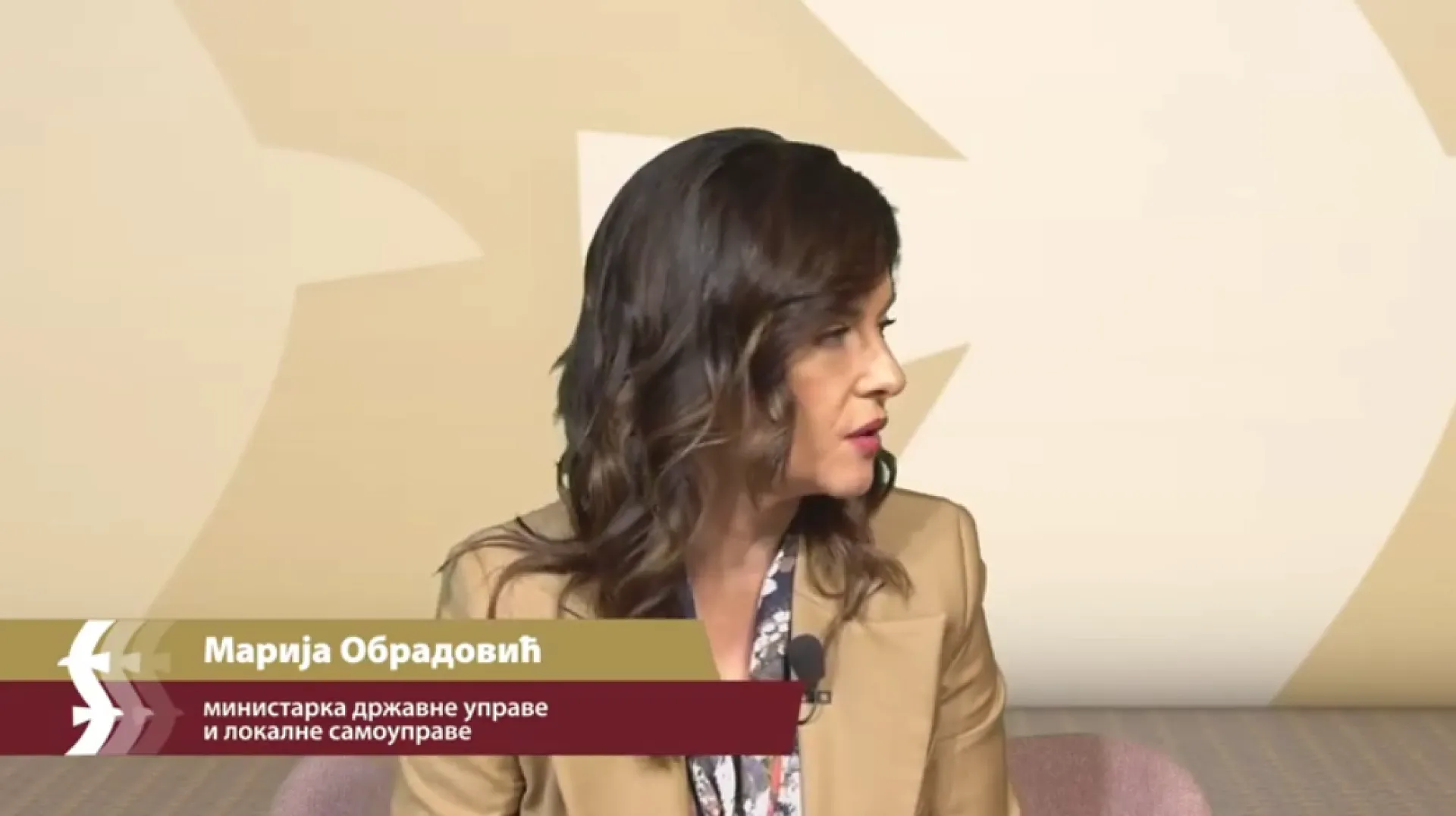
Marija Obradović, Minister of Public Administration and Local Self-Government, spoke about the adoption of the strategy on public administration and local self-government reform and innovations in that area. This planning document should cover a ten-year period.
- It may be a long period, but now we are laying the foundations of a system that will bring benefits to the citizens. We started the preparation of that document with the support of the Swiss Government. Such a document is being prepared for the first time and is nearing the end, after which a public debate awaits us - she stated.
Obradović on MPALSG priorities
Also, Minister Obradović pointed out several directions in which the document will move: improvement of the legal framework in order to perform competencies more efficiently and effectively, implementation of standards and harmonization with the most important international acts. One of the priorities is the further development of the financing system and its stability, and it is necessary, she says, to strengthen the accountability system.
- We want a strong incentive for human resource management because a professional and efficient management is based on employees who have all these qualities. The Academy of Public Administration has also become important in all of this. We have to help people, to offer them the tools to do their jobs better and with better quality - she says.
She also states that it is quite clear that not all politically elected representatives have the capacity to lead cities, and points out that by connecting and cooperation of cities and municipalities, new qualities in providing services are gained.
She also stated that once a week, the leaders of MPALSG have consultations with mayors of cities and municipalities in order to solve problems together with mutual interest. She also explained that the Covid pandemic also affected the budgets, but she also pointed out that the ministry received 68 percent more money than before.
- We expect new proposals for citizen participation in local self-government and communication with their elected representatives, to strengthen municipalities in the EU accession process. Out of the total number, we have 60 new mayors in Serbia, and the arrival of new people is felt somewhere - said the Minister.
E-government and Single administrative place
The Minister also spoke about the stronger establishment of e-government, which, she says, is "a special topic that should be strengthened". She also referred to the Single Administrative Place (JUP), whose essence is that all the jobs that citizens need in the local community can be completed at one place.
- It is an example of how the state can be accessible, and that is what we strive for. Maybe it's not a bad idea to make online communication with the SCTM, for people to follow us live, to ask directly what they are interested in ... I would like them to overwhelm me with questions, and online communication allows us to do that - said Obradović.
She says that communal services are another priority, and that the preparation of a plan for the reform of communal systems is also something that will be worked on.
- Some once joked about that topic, but it is obvious that it is indisputably important, because it is a shame that in the 21st century we do not have water supply and sewerage. If we ask for the level of hygiene to be increased, how else will we do it - she asked.
She stated that in Serbia, but also in other countries, there are differences in larger and smaller units of local self-government, but that the idea is that everyone can provide services in a standardized way, and not that they differ from city to city.
- When we start with the reforms, it will be necessary to involve all departments in the Government and local self-governments, either directly or through the SCTM. This government has a term of one year and a half, but that does not mean that we should not continue to improve our work - said Obradović.
Ratković: Decentralization and modernization
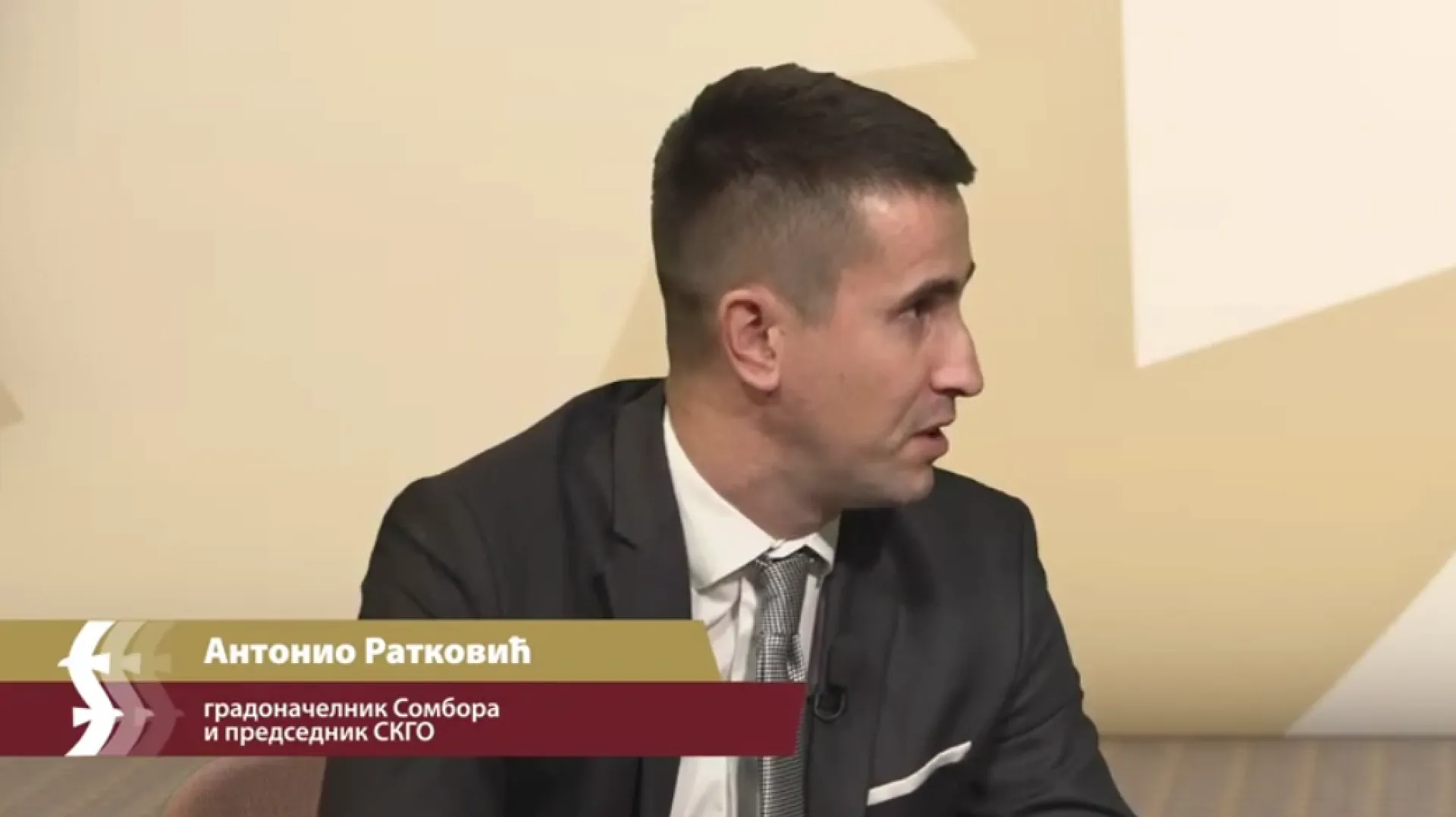
The Mayor of Sombor, Antonio Ratković, said that what he wants is a modern local self-government that will be harmonized with European standards, which is professional, successful and accessible to citizens and the economy.
- Decentralization and modernization are something we strive for. Local self-governments that do not have the capacity should be additionally helped and empowered, and all those who have mastered it should be given another part of the responsibility. We have to use more and more electronic services, and JUP is something where that could be achieved. We have established such a place in Sombor and I am glad that the citizens can do everything in a very short time - he said.
By the example of Sombor, he also explained how local communities can get involved in making certain decisions. One of the examples, he says, is the participatory budgeting project, where citizens in their local communities chose for themselves what they want to be done.
- From 2021, each local community will be able to decide which project is the most useful for it, and which will then be in the city budget. Also, we left the high schools in our city the opportunity to decide what they need and what the city can help them with, so we included the citizens in that way as well - he explained.
He added that local self-governments have faced numerous challenges this year, but also that one of the things that is more or less noticeable was the lack of capacity and electronic resources.
- The crisis was a test for every administration, some managed better, some did not, but it should be used to draw conclusions. The priority is more resilient, more inclusive, greener and healthier cities - he said.
Ratković states that 2020 was a difficult year for all cities and municipalities, that it is important to rationally allocate funds in the conditions of covid, having in mind that revenues were lower everywhere. He said that the training of public administration employees is very important and stated that he is currently attending one of them.
Minister Obradović added to that, saying that there is always something new to learn and added that there were a lot of students at the Academy for Civil Servants from the beginning, but that now the number has decreased. She invited employees of local administrations to join the training, adding that it is free.
Kiefer: "In a crisis, people are the answer"
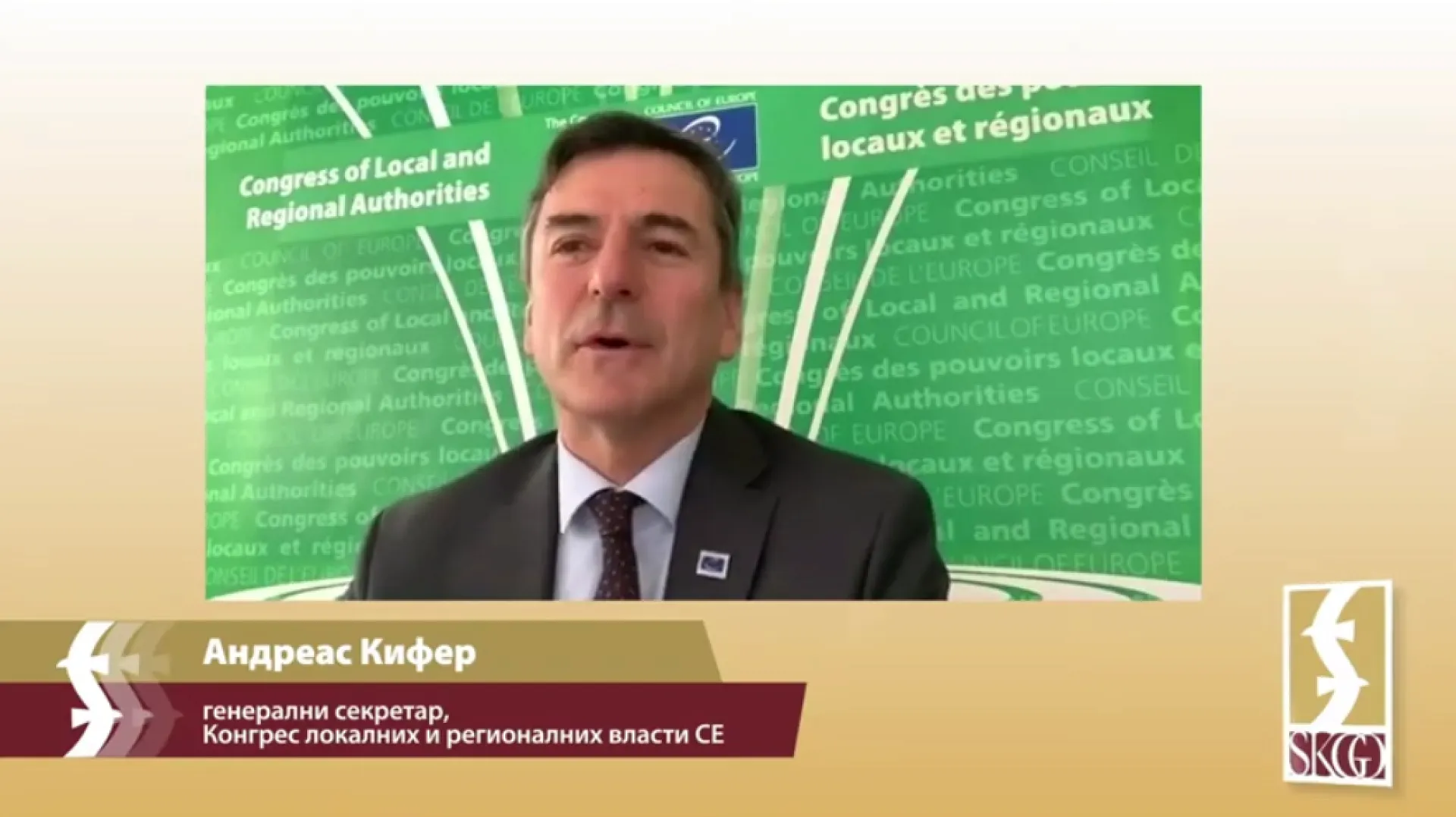
Andreas Kiefer, Secretary General of the Congress of Local and Regional Authorities of the Council of Europe, stated that there are good bases for development in cities and municipalities and that the challenges for them are the same.
- During the year, we saw that some procedures were useful, but also that some should be improved and enhanced - he said.
He added that in the whole of Europe, the response to the corona crisis was the best when all actors, from the national, through the regional to the local level, cooperated, talked, designed measures and implemented them.
- In the crisis, the answer is people, who must follow what governments and local self-governments say - he pointed out.
He also says that the problems are not the same in every country, city and municipality, but he also points out that when it comes to Serbia, political dialogue should continue with the Ministry of Public Administration and Local Self-Government, but also with the SCTM, in order to help Serbia on the path of modernization.
He also stated that due to the corona virus pandemic, the Council of Europe was not able to observe the local elections, but he also pointed out that democracy must function even in times of crisis. However, he states, personal contact and face-to-face conversation is something that is definitely missing.
Kiefer also referred to the mutual cooperation between Serbia and the Council of Europe, saying that proposals are expected on what it will look like in the future. He also talked about people who are in positions in local authorities.
- We have seen somewhere that the best people are elected to local positions and in some countries there is even a criminal liability of local representatives if, say, someone gets hurt on a local road - he stated.
He says that it is important to promote the integrity and transparency of the work of local self-government leaders and the trust that must be placed in them, and that it would be good to apply the experiences of different countries. He cited the example of the Council of Europe's GRECO, which deals with corruption and ethics and transparency, adding that politicians are role models and have a responsibility to maintain confidence in the political system. He also says that the Council of Europe works a lot with young people to get them interested in getting involved in politics.
Decentralization and training
Speaking about decentralization, Kiefer stated that it has several aspects, but that training and empowering people to work in local self-governments is crucial.
- Without a constitutional and legal basis, there will be no final goal, because both sides are needed - he says.
He also explains that in the future, the Council of Europe will renew delegations and form new ones that deal with work at the local level, that their mandate will be five years, and that there will be more flexibility in many. He also says that Serbia already had its representatives from local self-governments in these bodies.
An effective response to the crisis in the health system is something that, he says, is one of the priorities and will be worked on in the coming years.
- This may not be the last pandemic, but the lessons are important and what recommendations we will give, and the Athens Declaration is one of the instruments. Cohesive society and reducing inequality are also a priority. We know that in small and remote municipalities we have different problems in relation to urban parts of the country. We also have the issue of climate change, which is not only environmental, but also related to human rights. At the presentation of the report in New York, the ministers said that without the contribution of local and regional authorities, we cannot look into this problem. At the level of one country, the local level participates more than 50 percent when it comes to this problem, - he says.
Speaking about digitalization, Kiefer states that the role of local authorities is to serve citizens, but also to protect their privacy.
- The Council of Europe is committed to that, as well as to higher levels of government fulfilling their obligations and responsibilities. I am glad that we were able to participate in supporting Serbia in these reforms and we will continue to support you. That is your reform, not something that should be imposed on you, and we are there to support, to work with mayors to tell us what is important - he concluded.
Vallier: Important role of local authorities
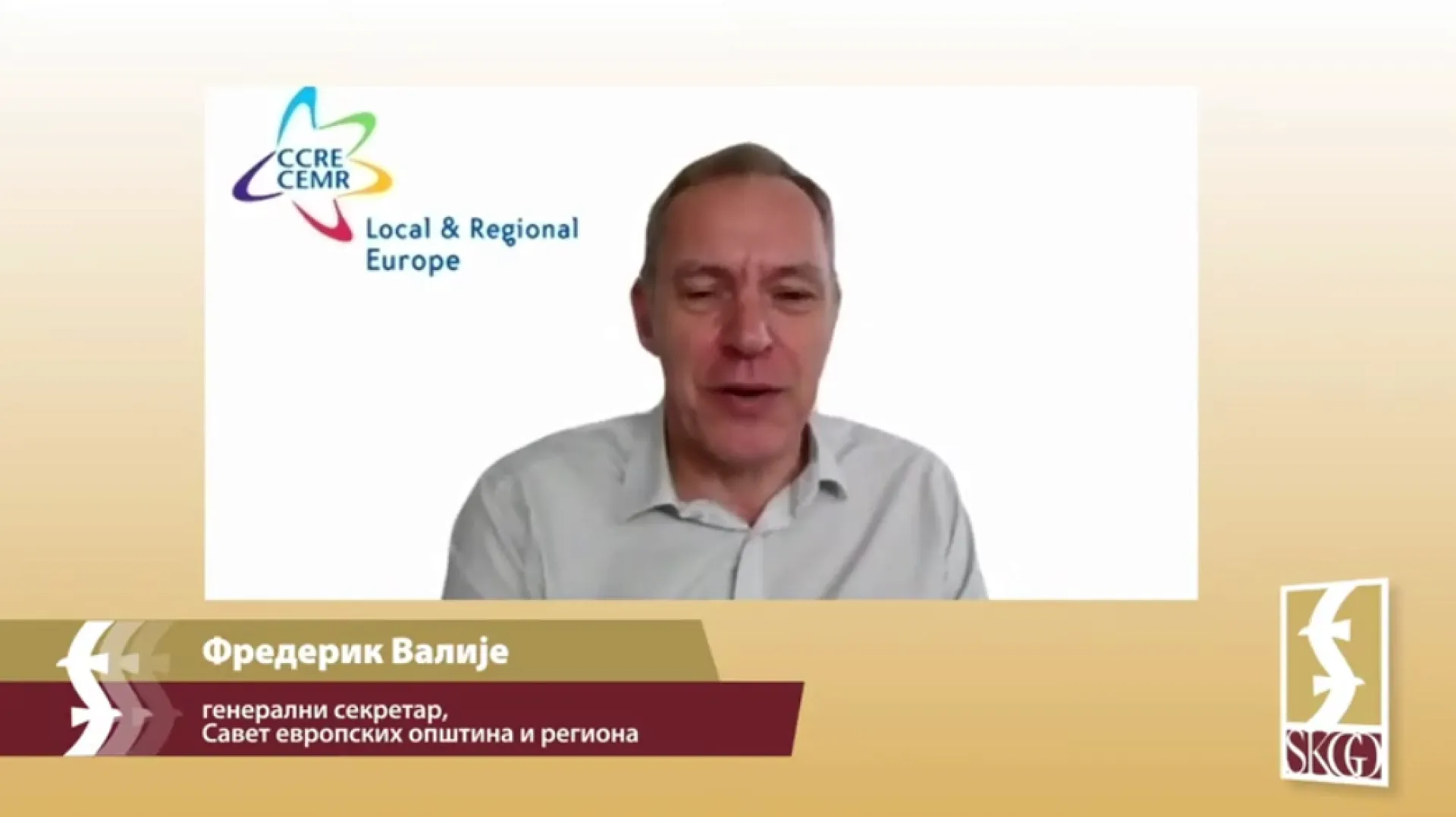
With expressed satisfaction with the participation in the gathering and greetings to the panelists and audience, the Secretary General of the Council of European Municipalities and Regions, Frédéric Vallier, underlined the goals of sustainable development as key in the activities of local authorities.
In this regard, he says, the work on a report related to this topic took three years, and during the last year we monitored how these activities have been implemented. The task of the organization he heads, he says, is to help members transfer this global strategy to the local level.
- It is the local authorities that will play a major role in the realization of the 2030 Sustainable Development Agenda in the coming years, and so far, they have been very engaged in that field. In that sense, we want to improve the Public Administration, with the level and quality of services they provide to citizens - he says.
He states that this process is also happening in Serbia, and emphasizes the good cooperation with the SCTM and the Government of Serbia.
- There are great challenges on this path, but we have great expectations and a lot of work is needed in order to get closer to the implementation of the set goals - Vallier states.
He also says that the corona crisis has affected everyone, that this situation has not happened for decades, and that he hopes that it will not happen again. Everything, he says, has changed - the way of life, our freedoms, our economic activities, and all that has posed a great threat to the continent.
- After the pandemic, we founded teams, and they all wanted to exchange information, knowledge and their practices. We have issued newsletters on these issues, but we have also coordinated the work of European institutions to work more closely with our members. We did research, analyzed the situation, the issue of opening schools, the situation in the economic sector ... It was within the first wave, when activities were centralized. Within the second, there is a need to recognize services provided at the local level - he says, and states that countries that have been decentralized have had fewer local problems.
A plan for the EU, but also for the surrounding countries
Vallier also stated that the lack and reduction of revenues led to consequences for the work of central and local authorities, which is why fast action is required at all levels. He also says that the EU has a plan for the renewal of economic activities and that they want it to be extended to the countries around the Union and the candidates for membership.
He also referred to digitalization and the fight against climate change, noting that the organization he leads wants a global response to such a situation, joint activities of European and non-European countries.
- We need to prepare for similar crises and situations, both at the national and continental level, but also locally. When the epidemic is behind us, all these data should be studied and prepared for the future - Vallier underlines, stating that the Council of European Municipalities and Regions will continue to strengthen ties between Serbia and European institutions.
He ended his speech by expressing support to the process of Serbia's integration into the EU, with the hope that it will soon be completed "both with Serbia and with all countries in the region".
Manolov: Crisis as an opportunity for improvement
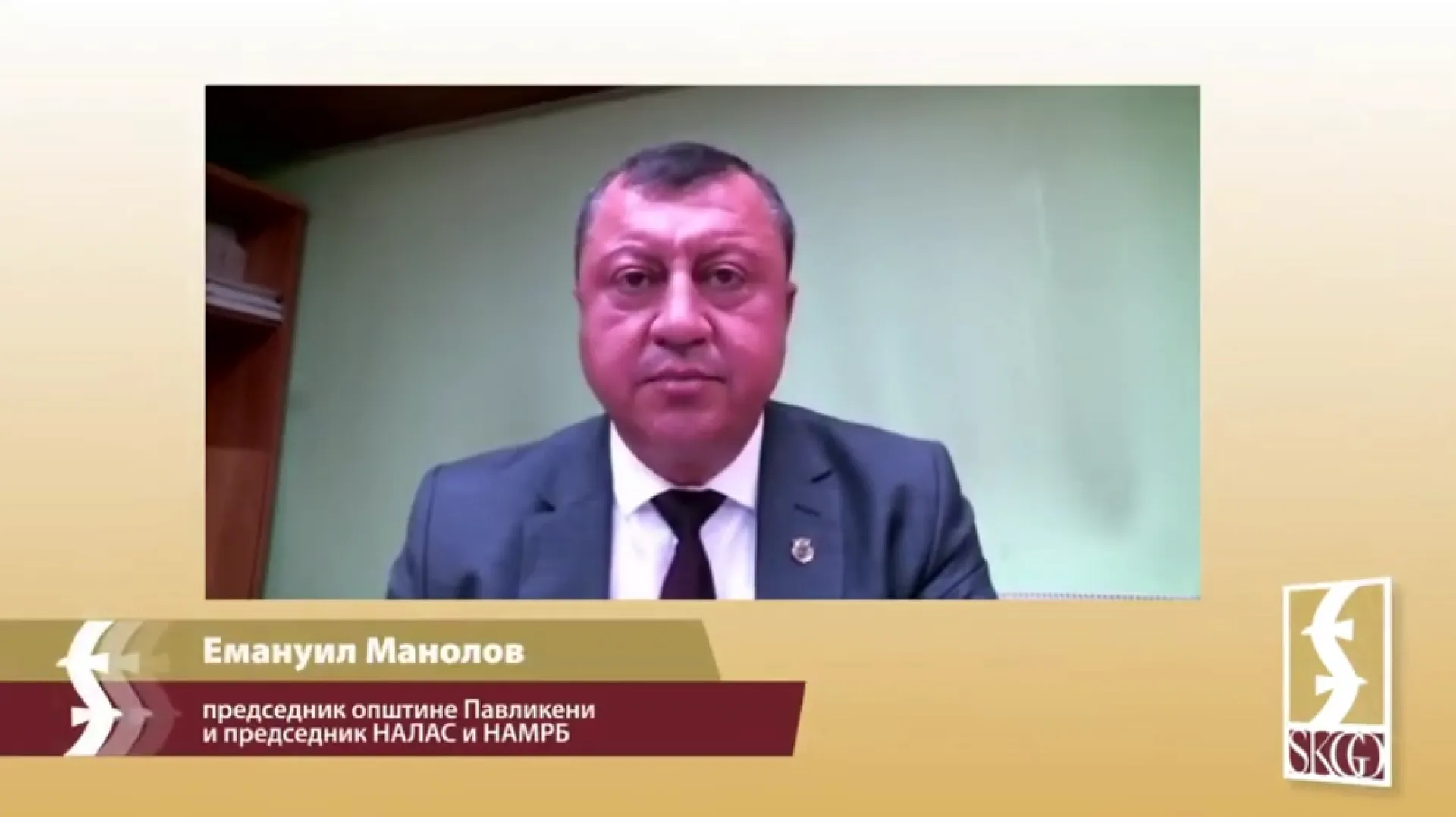
The panel was also attended by Emanuil Manolov, President of NALAS (Network of Associations of Local Authorities of Southeast Europe) and NAMRB (National Association of Municipalities of Bulgaria), who is also the Mayor of the Bulgarian Municipality of Pavlikeni.
Looking to the future, he says, we must understand the crisis as an opportunity to improve local services and a long-term incentive for local development, and that efforts must now focus on the recovery of communities and economies.
- At the same time, recovery should not be an end in itself, but should also ensure continuous sustainable development. "Now more than ever, we need a real vertical and horizontal cooperation, coordination and consultations between different levels of government, in order to prevent overlapping activities and minimize the risk of inconsistent solutions", he said.
He also says that local self-government associations play a key role in coordination and cooperation at all levels of government, which is why they have a vital position in responding to the pandemic and in planning and implementing social and economic recovery.
- They must be supported in these challenging tasks - he points out.
NALAS study
Manolov referred to the findings of the NALAS study: Local Authorities of Southeast Europe in Socio-Economic Recovery after COVID-19, emphasizing two important points: the dramatic impact of the crisis on local finances and the importance of cross-border cooperation in dealing with the crisis.
- Lessons learned and shared experience can help local self-governments in Southeast Europe to cope with the future crisis. It is our responsibility as regional networks to document and create opportunities for the efficient exchange of this knowledge. Similarly, we must develop appropriate recommendations and support the efforts of our national associations of local authorities - he stated.
Speaking about the effects of the corona crisis, he pointed out that among the challenges is close cooperation between local and central government, decentralization and assistance to all municipalities, finding additional funds, especially for sparsely populated places in the entire region of Southeast Europe.
- The first task is to protect ourselves from Covid-19, to see what the level of damage is as a whole. The most important thing is to improve all services and instruments that can help us in that - he concluded, wishing the representatives happy holidays with the desire not to let down their citizens.
Mogic: Harmonization with the EU
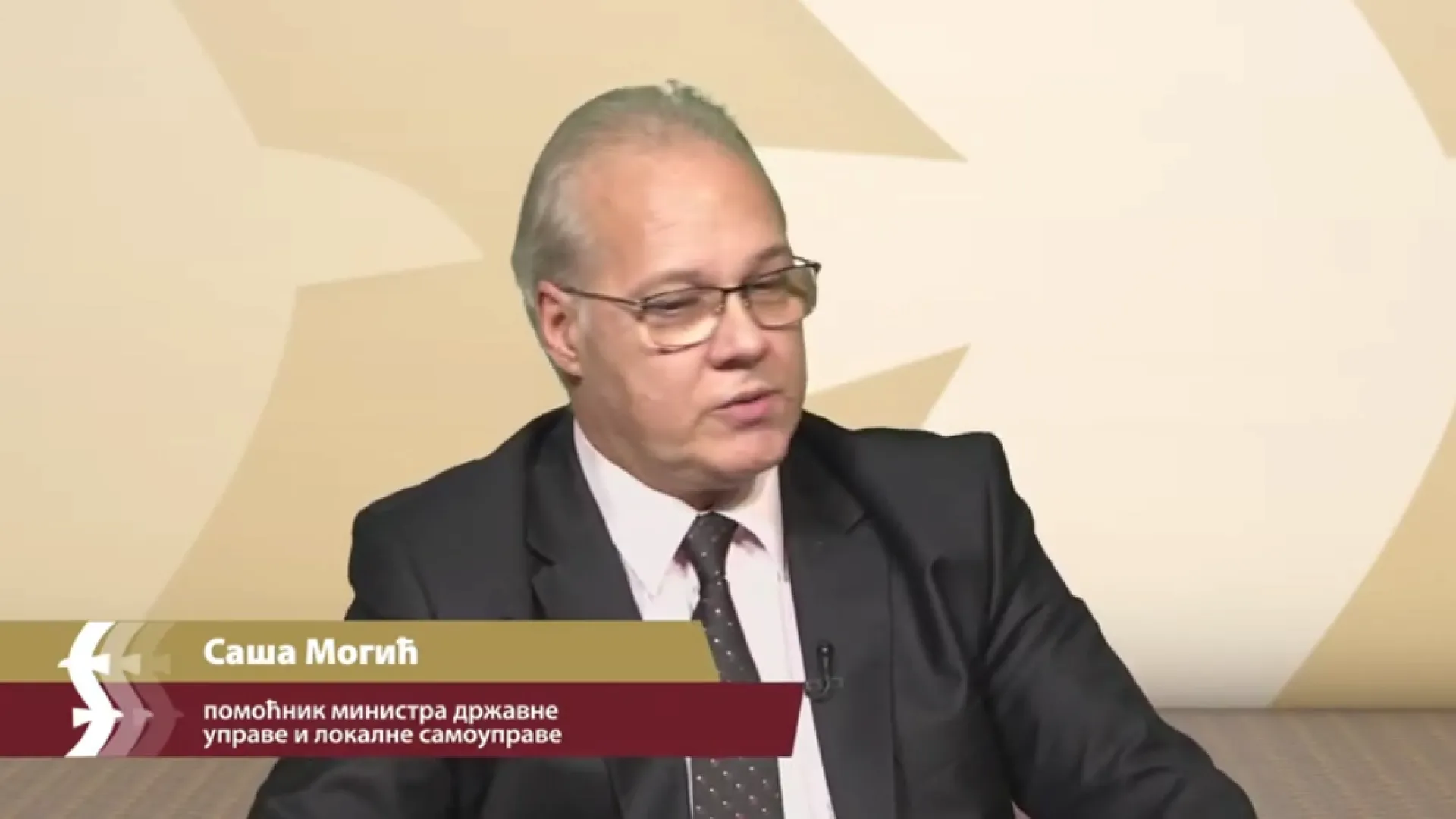
Assistant Minister of Public Administration and Local Self-Government, Sasa Mogic, stated that amendments to several laws are expected soon, as well as ratification and harmonization of regulations with the European Charter.
- Our intention is to make an analysis in the provision of services at the local level and to have enough knowledge and arguments to make a common index of quality of services provided to citizens and the economy - in this regard, I am optimistic - he says, adding that communal services are imposed as one of the priorities for solving, but also that there will be talks about the transformation and changes of public companies.
He also spoke about inter-municipal cooperation that permeates the entire system of local self-government, and that new solutions and programs for that cooperation should be devised, for example at the level of administrative districts.
- There is a large number of districts that have area or regional character, so in their association, a new synergy and quality would be obtained when it comes to doing business - he says.
Decentralization is also one of the important things, but Mogic states that it would be good to transfer jobs to the local differently than before: everywhere, to everyone, and at once.
- Many municipalities are not ready for that. If, however, this practice continues, and I think we will have mandatory forms of inter-municipal cooperation for all those who do not have that capacity, their association and merger would create that level of quality. Also, those municipalities and cities that can, should not wait for the development of others - says Mogić.
Conditional decentralization
One option that is "on the table" in relation to this area is conditional decentralization, which in practice would mean that the state can offer cities and municipalities a list of jobs to do them themselves if they have the capacity.
- Apart from various forms of inter-municipal cooperation, we will also have proposals concerning a different function and affairs of administrative districts, which will be turned to ministries in order to perform the wider scope of their affairs locally - he explains.
The Assistant Minister also pointed out the management of human resources as one of the most important topics at the local level, with the application of a new and adjusted system and competencies for promotion and rewarding according to merit.
- For the first time, we will try to calculate how much money is needed to perform the work of a local self-government. It is important to have a good argument when we talk about the needs and finances of cities and municipalities, what is expected of them, but also to have a clear picture of costs - he says.
The plans of the relevant ministry also include stronger import of program budgets in order for the financing to be more correct and stable, "and to have as few situations as possible for history to start from the beginning". A new law on the referendum and the people's initiative is also expected, as well as the beginning of a public debate when it comes to administrative reform.
He also praised the joint work of the ministry and the SCTM on the index of good governance, which was also presented in the Council of Europe, where, he says, it was well evaluated, and which could be recommended to other countries.