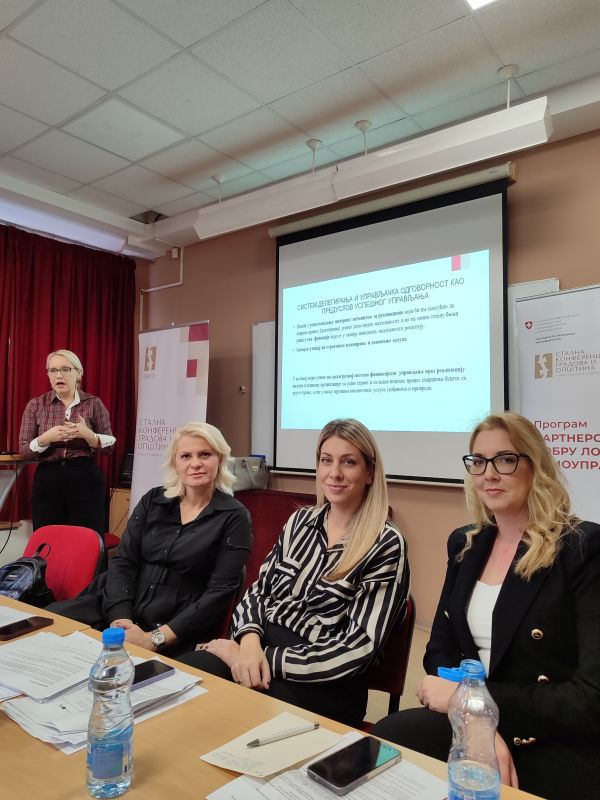
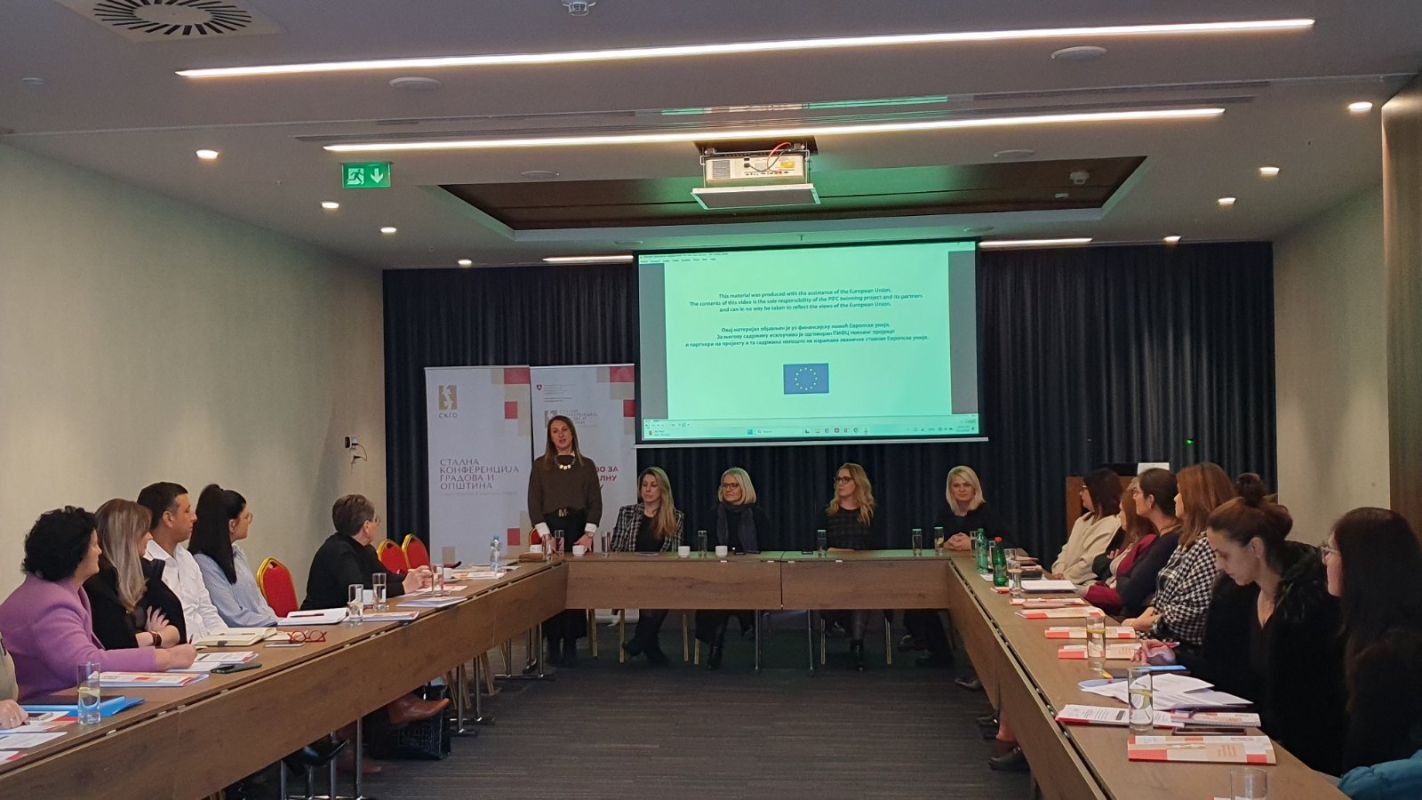
The Standing Conference of Towns and Municipalities (SCTM) organized four regional one-day workshops for employees of local self-government units from 4 November to 2 December 2025, on the topic “Process Segmentation and RACI Methodology – Financial Management and Control Tools for Responsible Governance – Application in Local Self-Governments.”
The workshops were held in Niš, Vrnjačka Banja, Belgrade, and Novi Sad within the Programme “Partnership for Good Local Governance,” implemented by SCTM with the support of the Government of Switzerland.
During the workshops, participants were introduced to key concepts and tools of the Financial Management and Control (FMC) system, with a particular focus on the application of a process-based approach, segmentation of business processes, clear definition of responsibilities and competences within the organization, prevention of duplication of tasks, and improvement of the efficiency and transparency of operations.
Managerial accountability, as one of the central principles of the FMC system defined by the Budget System Law, was highlighted as the basis for a clear division of roles, authorities, and responsibilities of managers in the processes of planning, decision-making, and control.
The importance of applying the COSO framework and the RACI methodology was presented as mechanisms for strengthening managerial accountability, improving planning, and ensuring the rational use of public funds. Particular emphasis was placed on the fact that the RACI methodology contributes to a clear delineation of roles – who is responsible, who participates, who approves, and who must be informed – enabling better coordination, greater transparency, and higher-quality decision-making.
Through practical work, participants analyzed business processes within their organizations, considered ways to improve organizational structures, and became thoroughly acquainted with the stages of risk management – from identification and assessment to the development of a risk register and the definition of mitigation measures.