03/03/2021
NGO Praxis reserch: Roma people discriminated in the labor market in Kraljevo
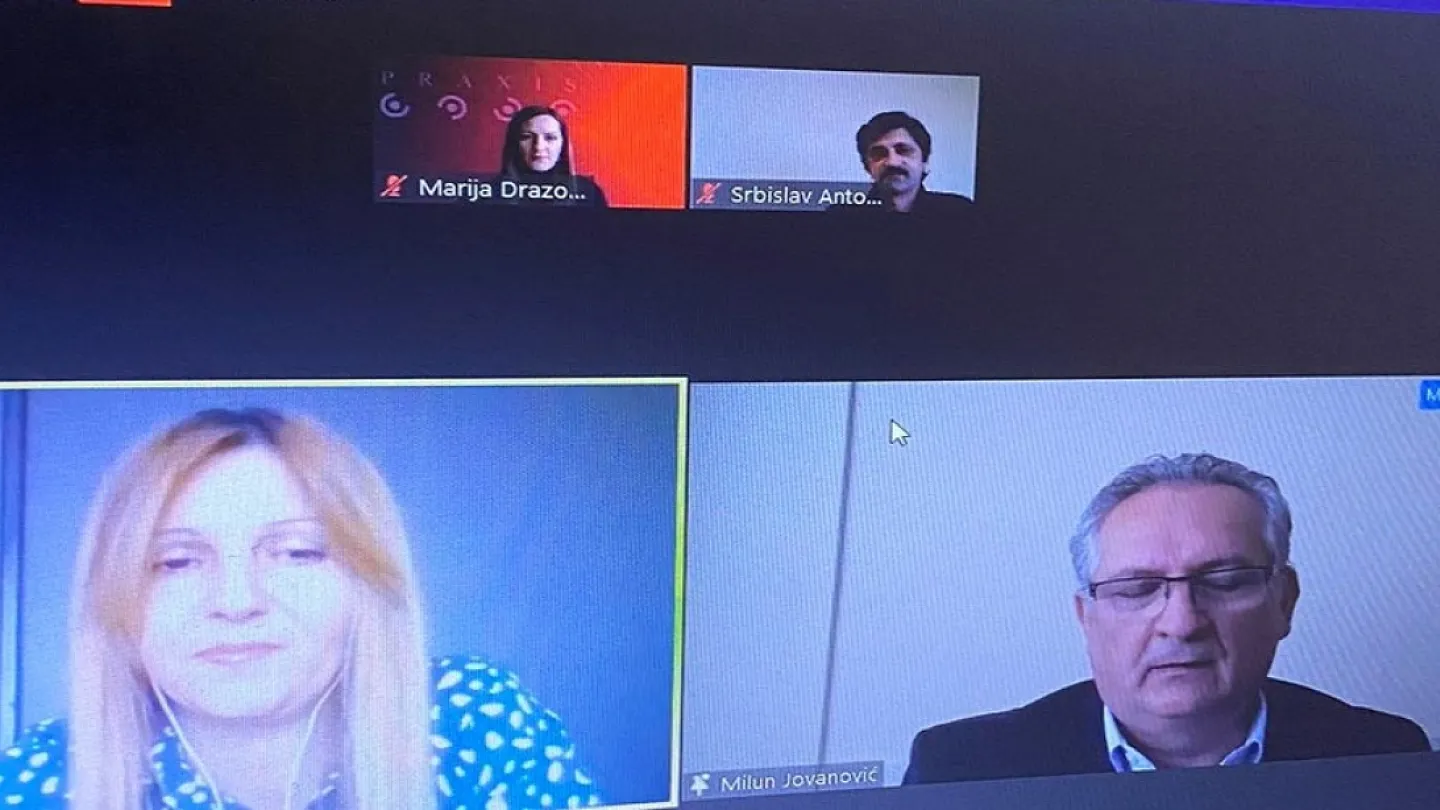
Members of the Roma population, even when they have a job, are poorly paid or often do jobs that are dangerous to their lives and health, is one of the conclusions of a study presented in Kraljevo on March 1, 2021 by the NGO Praxis.
"These are jobs that are least valued in society, because due to the prejudices that society has towards the Roma, they are mostly given only such jobs", says Marija Drazovic, coordinator for public policies and research at Praxis.
She also pointed out that the Roma national minority believes that the measures implemented with the aim of employing Roma men and women are not adjusted to the real needs of potential beneficiaries and that they should be redefined.
The results of the research also show that members of the Roma national minority are highly exposed to discrimination, insults, belittling and hate speech, as well as that they do not know the mechanisms for the protection of the right to equality. One of the serious reasons why Roma do not seek protection from discrimination is the fear of victimization, the research showed.
The publication is based on a survey conducted by Praxis in June/August 2020 in order to provide insight into the key challenges faced by the Roma national minority in the labor market in Kraljevo, insight into the effectiveness of active employment policy measures, as well as the emergence of the most common forms of discrimination against Roma men and women in the field of work and employment.
Praxis conducted a survey on a sample of 100 Roma people in Kraljevo, and 66 of them were never formally employed. Almost half have not even finished primary school, and 40% say they are not even looking for a job.
The situation is like this because Roma men and women are a vulnerable group, Drazovic said.
"There are 417 Roma people on the list of the National Employment Service, and 365 of them are people with primary or incomplete primary school, and only one person has a university degree", said Srbislav Antonijevic, employment advisor at the National Employment Service - Kraljevo branch.
Milun Jovanovic, the Assistant Mayor of the City of Kraljevo for human rights issues, also spoke at the conference, saying that the plan of the local authorities in Kraljevo is to work on "functional adult education, housing, and providing health care". Jovanovic also spoke about public works as one of the best opportunities for the city to help the Roma. Another option is the city's competitions for self-employment, to which, unfortunately, a large number of Roma do not apply, most often due to a lack of confidence that they will be able to do anything.
"We must all work together to make the community aware of the importance of getting involved in the measures that are offered to them. It seems to me that the long-standing discrimination and marginalization, especially of the poorest Roma, is the cause of their distrust that anything can be changed. We must all work together to analyze the current measures and design new ones, both civil society, local self-government, the media, and the public", said Marijana Lukovic, Executive Director of Praxis.
The Praxis survey showed that Roma are mostly satisfied with the way they address and understand the information they receive from the National Employment Service. Although they have confidence in the work of the NES and its officials, they do not believe that this service is able to find them a job, i.e. they do not see the effects of the measures themselves.
Praxis research also showed that the living conditions of Roma deteriorated even more during the pandemic.
It is worrying that a large number of them do not even know how to fill in an ordinary payment slip - which is devastating for the whole society. Half of the Roma respondents say that they have a business idea, but also that they do not have start-up capital, that they are afraid that they will survive on the market and manage to maintain business, which is why they do not dare to start realizing their business ideas.
"We need the promotion of examples of good practice - for the media to widely spread news about successful Roma men and women who have started their own business, for example. This would have a positive impact on other members of the community to be more involved in active employment policy programs and use other available resources, as well as to change the awareness of members of the entire population towards the Roma community", said Drazovic.
The publication was prepared within the project "Improving the position of Roma men and women in the labor market in Kraljevo", which the City of Kraljevo is implementing in partnership with the NGO Praxis. The project was implemented within the grant scheme of the program "EU Support to Roma Inclusion - Strengthening Local Communities for Roma Inclusion", funded by the European Union and implemented by the Standing Conference of Towns and Municipalities.
You can download the publication HERE.