01/14/2026
The Municipality of Beočin Introduced a New Day Service – Home Care
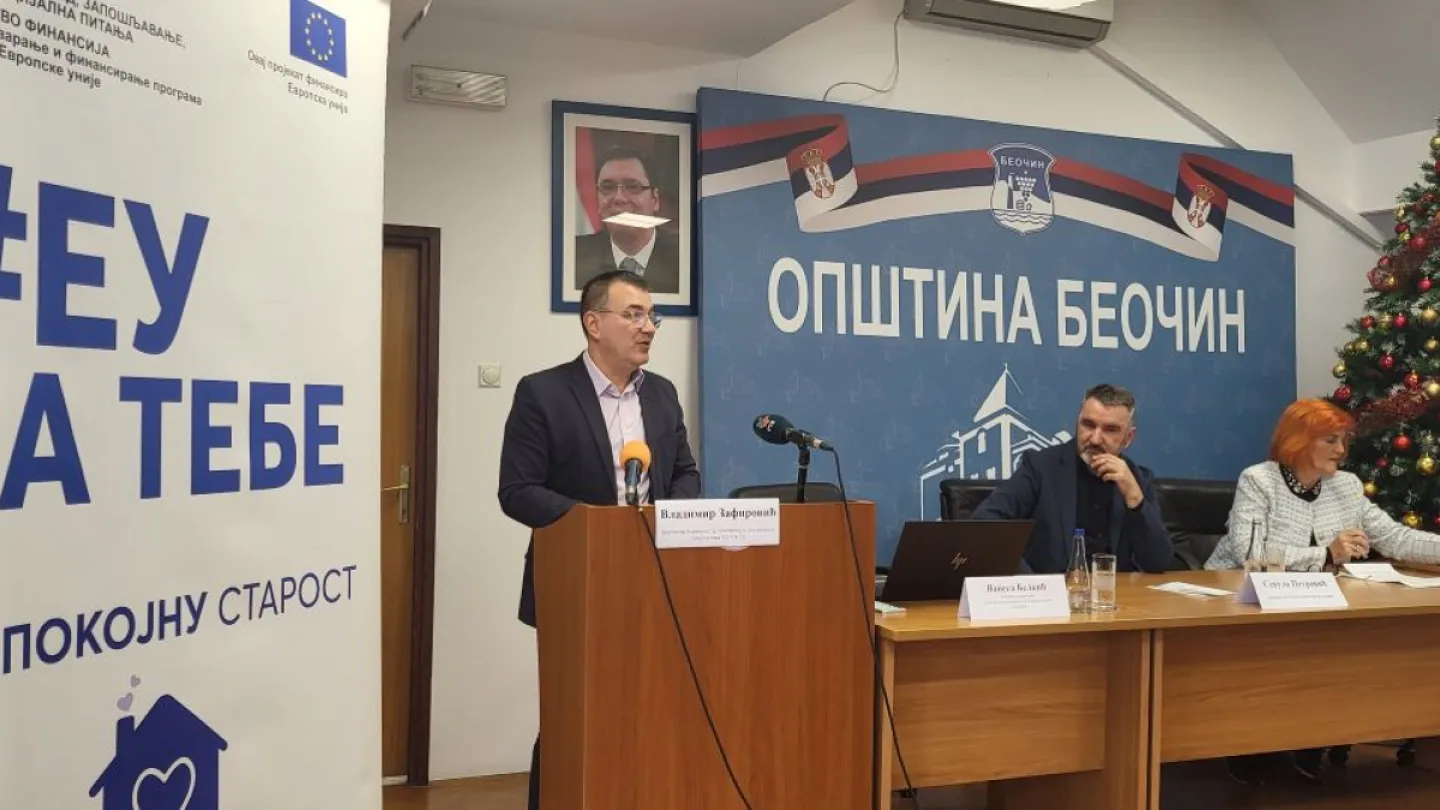
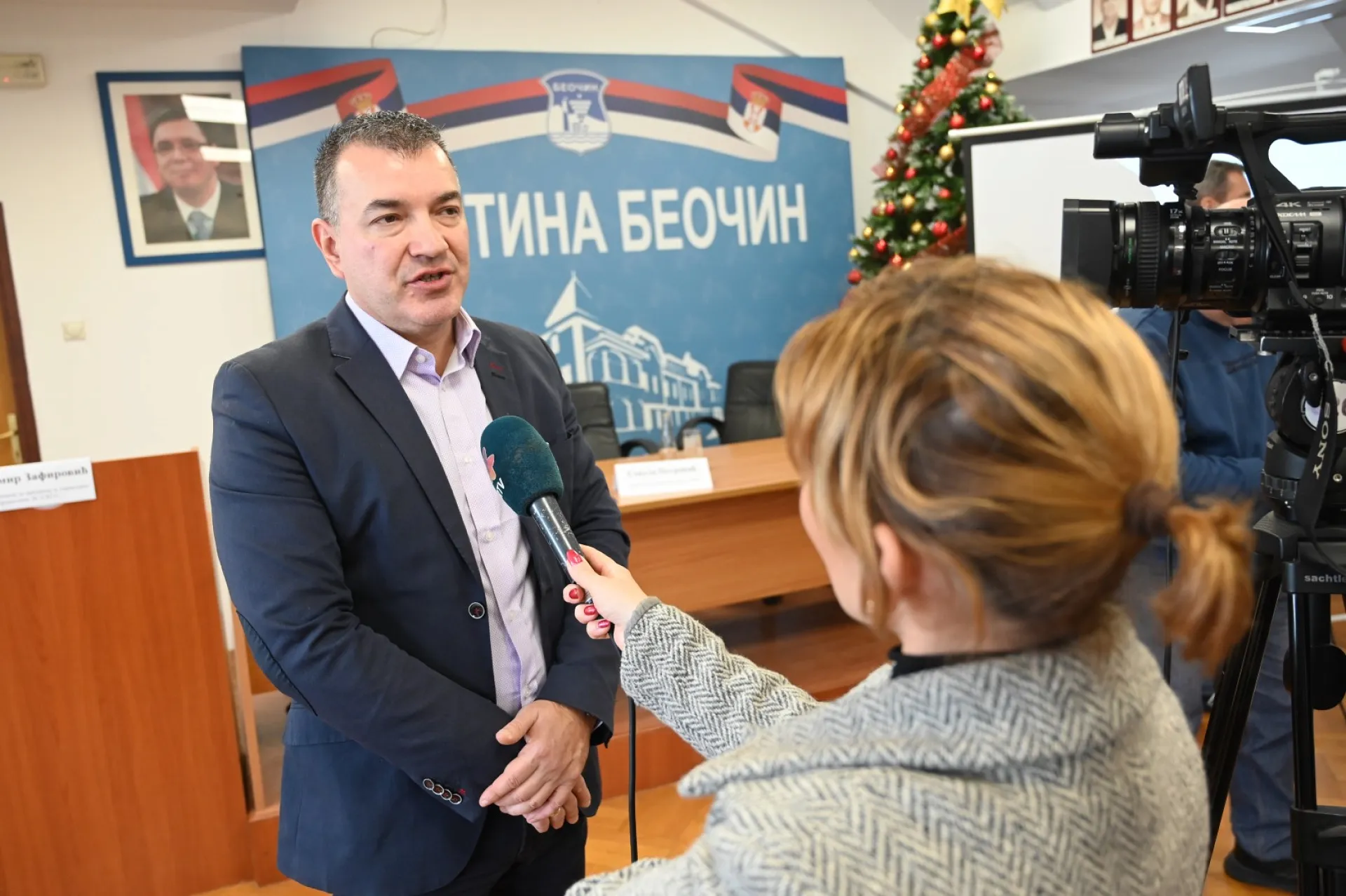
In the Municipality of Beočin, on 13 January 2026, a closing conference was held at which the results of the project “For a Peaceful Old Age – Improvement of Social Protection in the Municipality of Beočin through the Establishment of the Home Care Service for the Elderly” were presented. The project was implemented in partnership with the Social Welfare Center of the City of Novi Sad and the Center for Equitable Regional Development – CenTriR. The project was financed by the European Union through the programme “Support to Sustainable Community-Based Social Services and Inclusion Policies at the Local Level”, for which the responsible ministry is the Ministry of Labour, Employment, Veterans and Social Affairs, while the Standing Conference of Towns and Municipalities (SCTM) is the implementation partner.
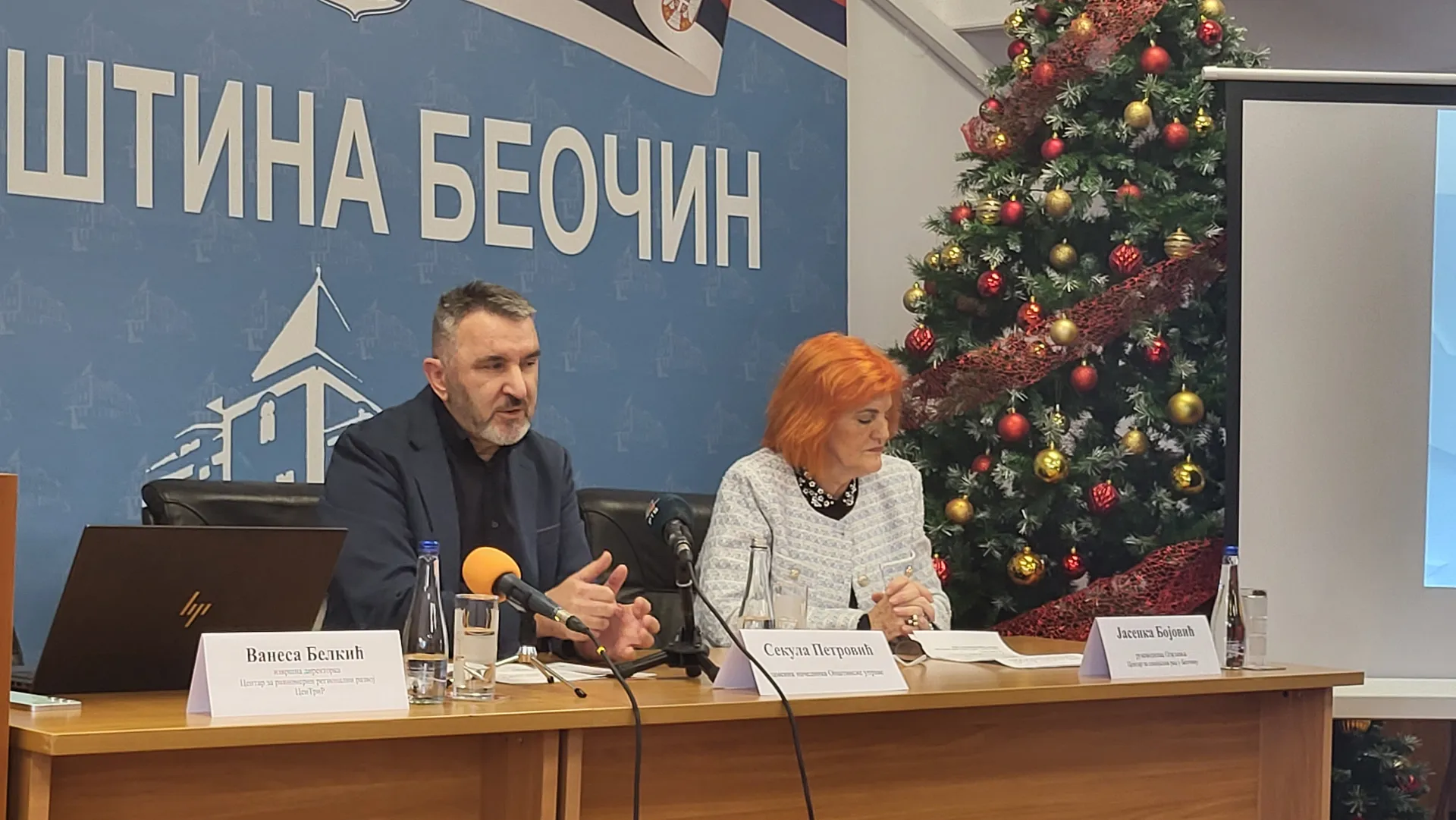
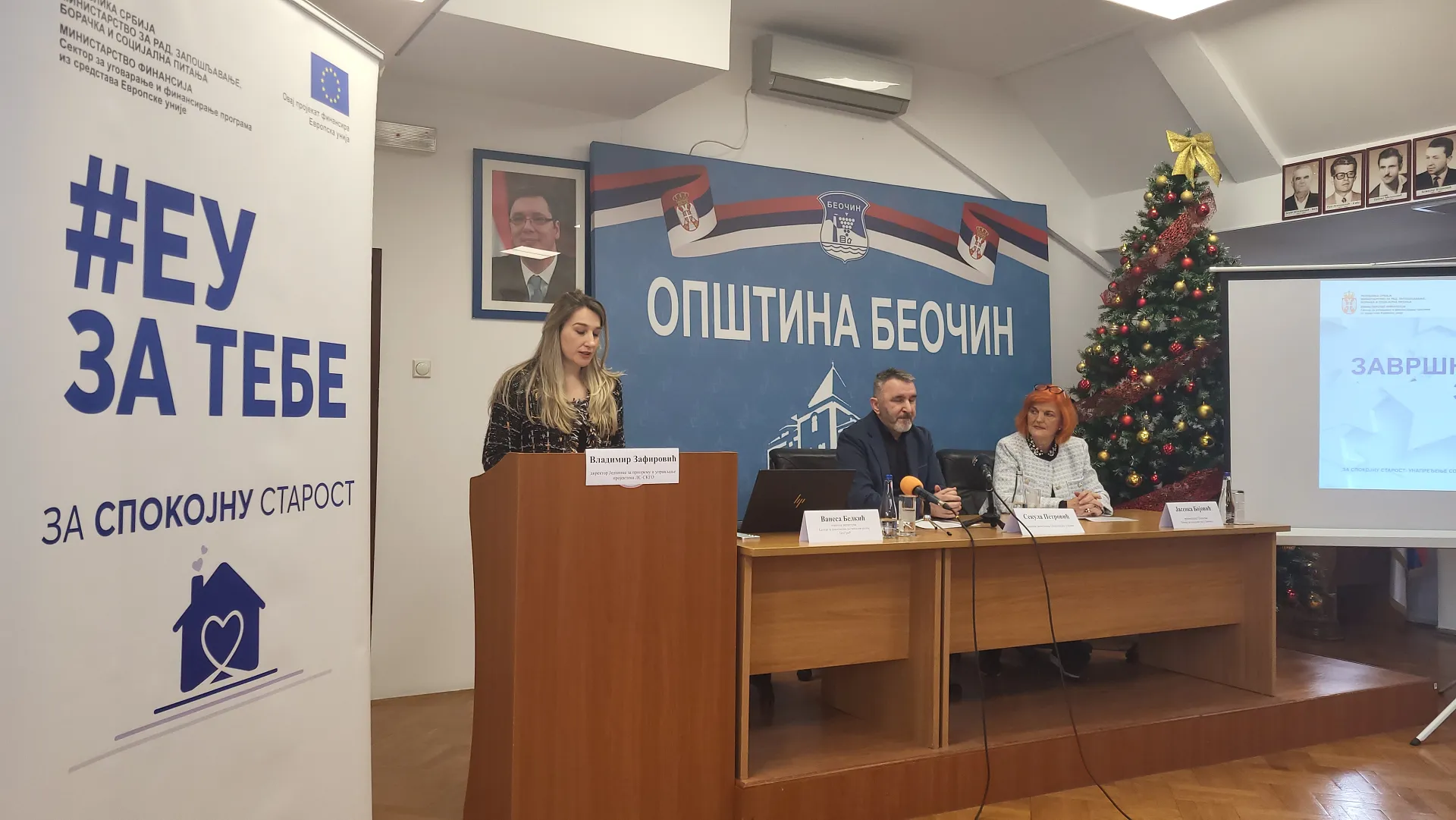
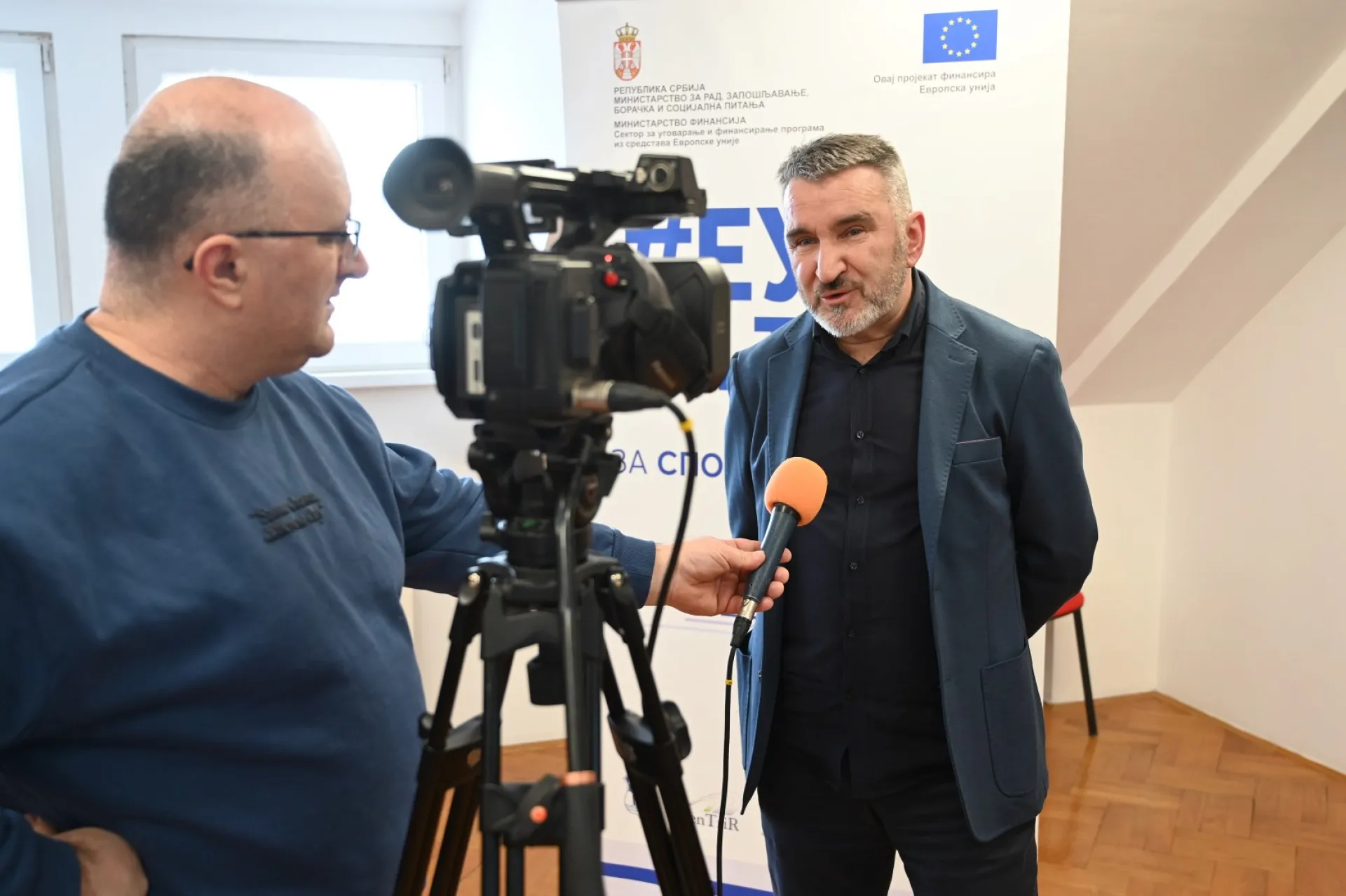
The following addressed the audience: Sekula Petrović, Deputy Head of the Municipal Administration of Beočin, Vladimir Zafirović, Director of the Unit for the Development and Management of Local Self-Government Projects at SCTM, Jasenka Bojović, Head of the Department in Beočin of the Social Welfare Center of the City of Novi Sad, and Vanesa Belkić, Executive Director of CenTriR.
Sekula Petrović emphasized that over the past two years, thanks to the technical support of SCTM, the Municipality of Beočin significantly improved the local normative and strategic framework in the field of social protection, on the basis of which, through the project itself, a new social protection service was established – Home Care for the elderly and adults with disabilities.
“The service has been available since March 2025, in addition to Beočin, in five more settlements: Rakovac, Čerević, Banoštor, Susek and Lug, and so far it has been used by 52 beneficiaries. We hope to expand the service to the remaining settlements of our municipality. From the municipal budget, 6.5 million dinars have been allocated in 2026 for the continuation of financing of this service,” emphasized Petrović.
The representative of SCTM, Vladimir Zafirović, pointed out that when creating the programme “Support to Sustainable Community-Based Social Services and Inclusion Policies at the Local Level”, SCTM started from the fact that local self-governments in Serbia have a key role in planning and developing social services, but that they often need systemic, long-term and comprehensive support.
“Through the programme, financial and expert support was provided for a total of 47 projects in 41 local self-governments across Serbia – 35 projects in the field of social protection and 12 projects in the field of Roma inclusion. In addition to grants, local self-governments had access to training, mentoring support, model documents, as well as continuous professional assistance in resolving concrete challenges they faced in practice,” emphasized Zafirović.
During the continuation of the conference, representatives of partner organizations addressed those present. It was pointed out that the Social Welfare Center of the City of Novi Sad, at the very beginning of the project, bore the greatest burden in mapping potential beneficiaries of the home care service.
“In order to target potential beneficiaries, we first used data from our databases, but a significant part was done in the field, through informing beneficiaries via presidents of local communities, distributing flyers, as well as through visits and assessment of the needs of elderly persons living in single-person households,” said Bojović.
According to the Executive Director of CenTriR, Vanesa Belkić, this organization has been successfully cooperating with the Municipality of Beočin for 15 years in the preparation and implementation of projects financed by the European Union, and this was their seventh joint project.
“Thanks to the dedicated work of the project team, most of the planned project indicators were exceeded. The home care service is currently available in six instead of four originally planned settlements in Beočin, the number of beneficiaries over nine months was 52 instead of the planned 40, and the total number of working hours of geronto-housekeepers was also exceeded, amounting to 6,528 hours of service provision to beneficiaries,” emphasized Belkić.
photo: Ismet Ademovski