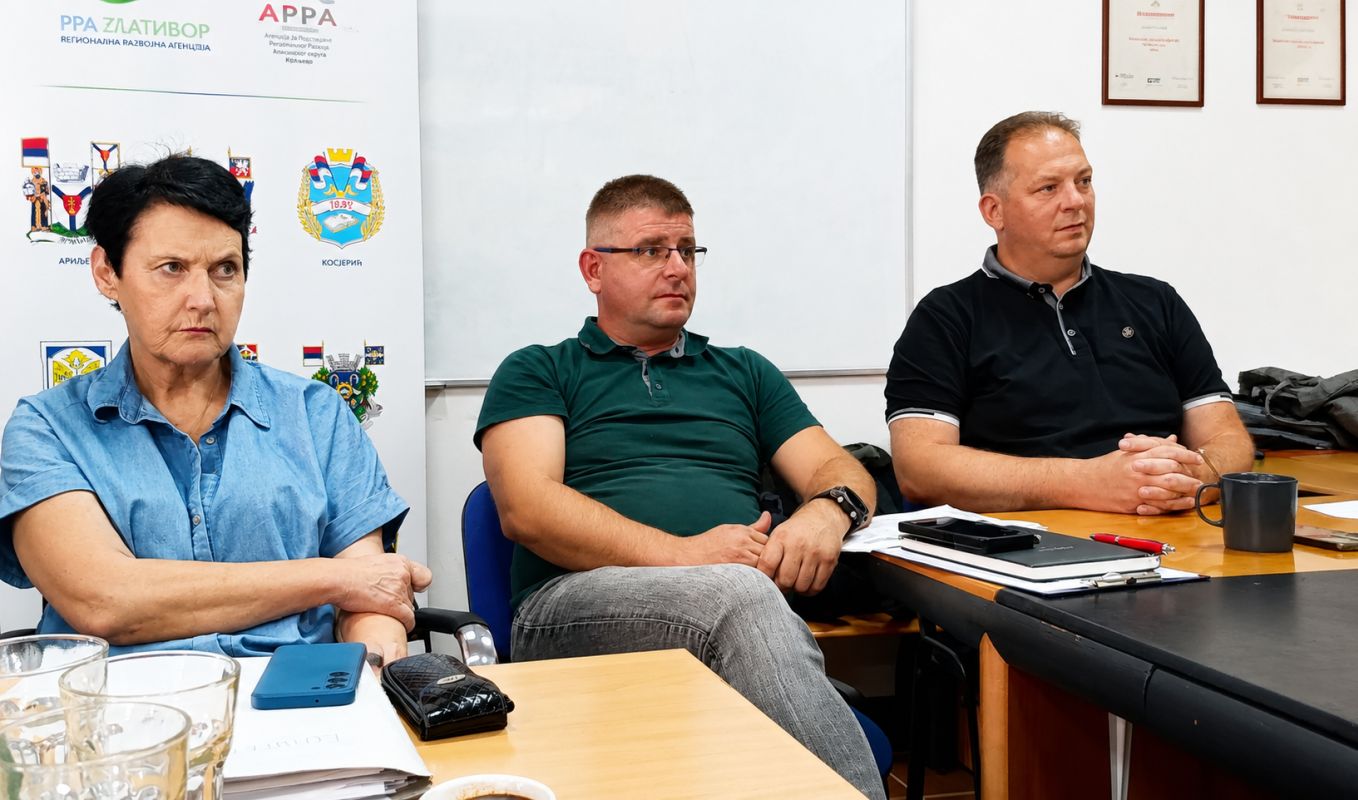
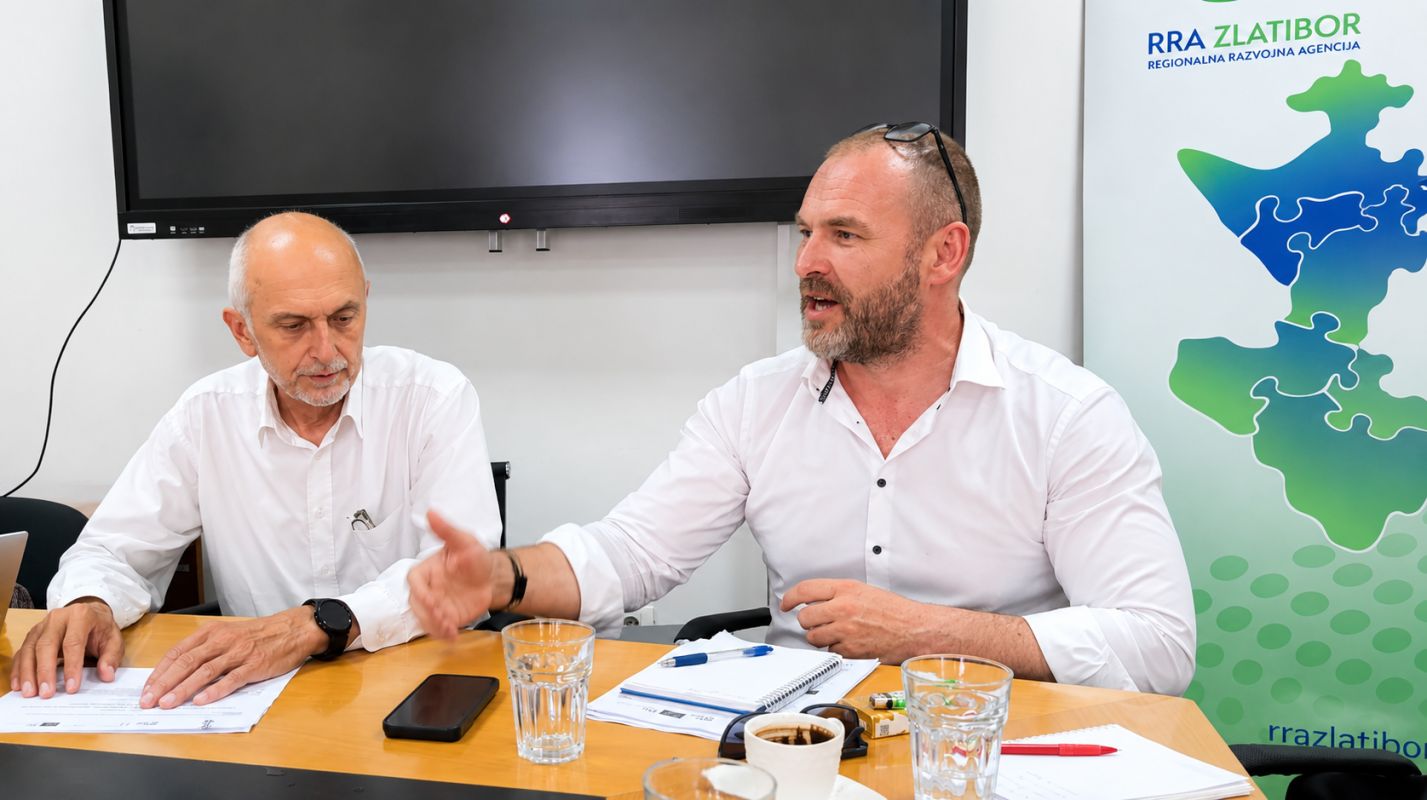
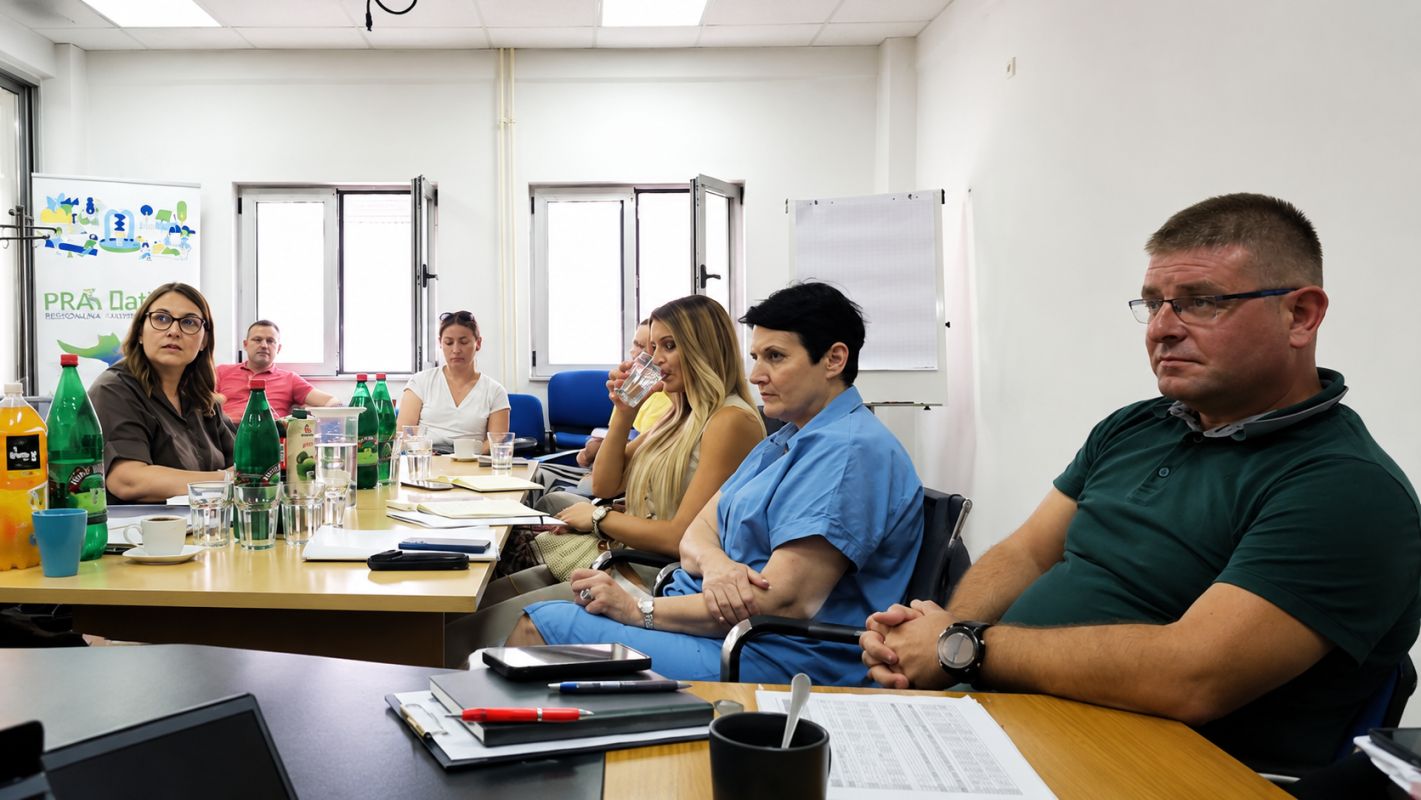
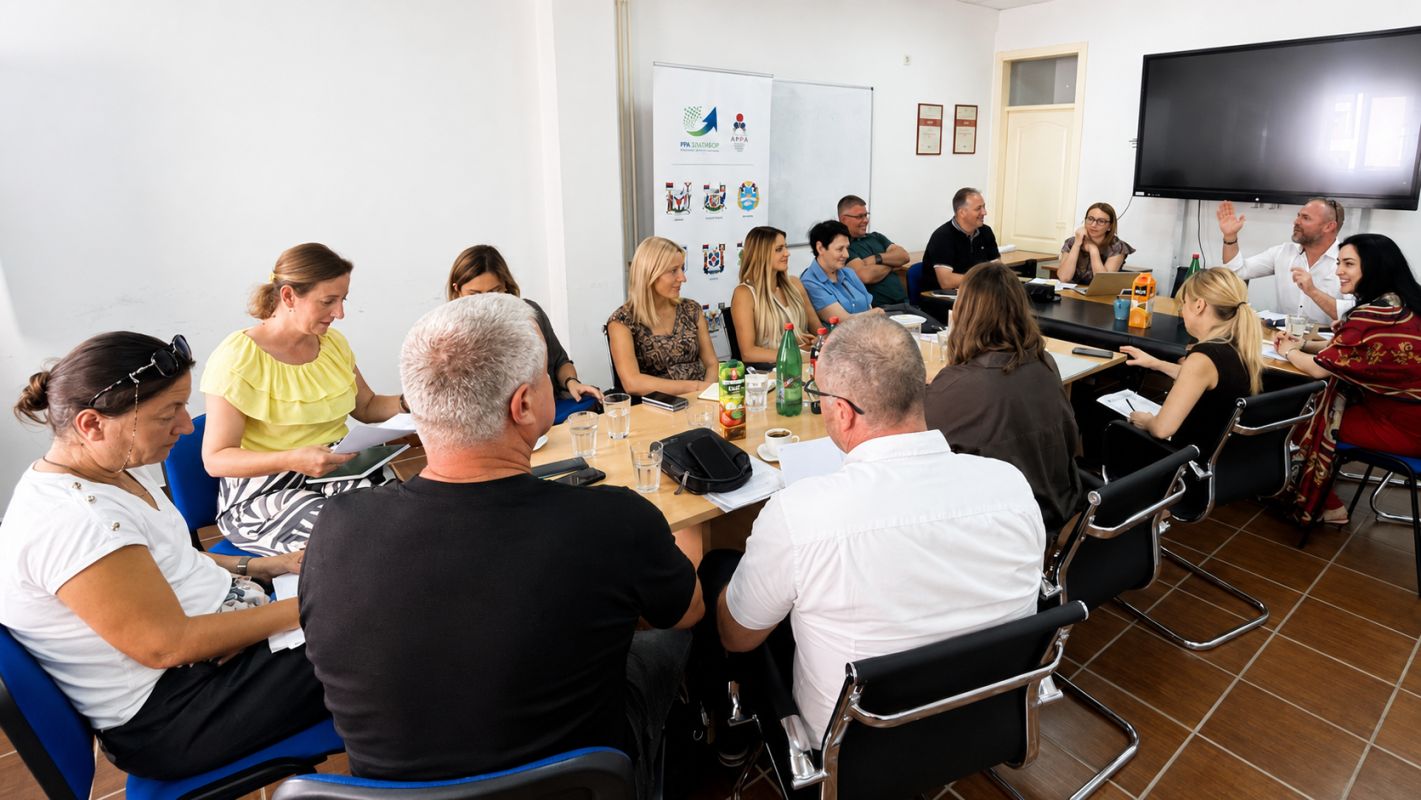
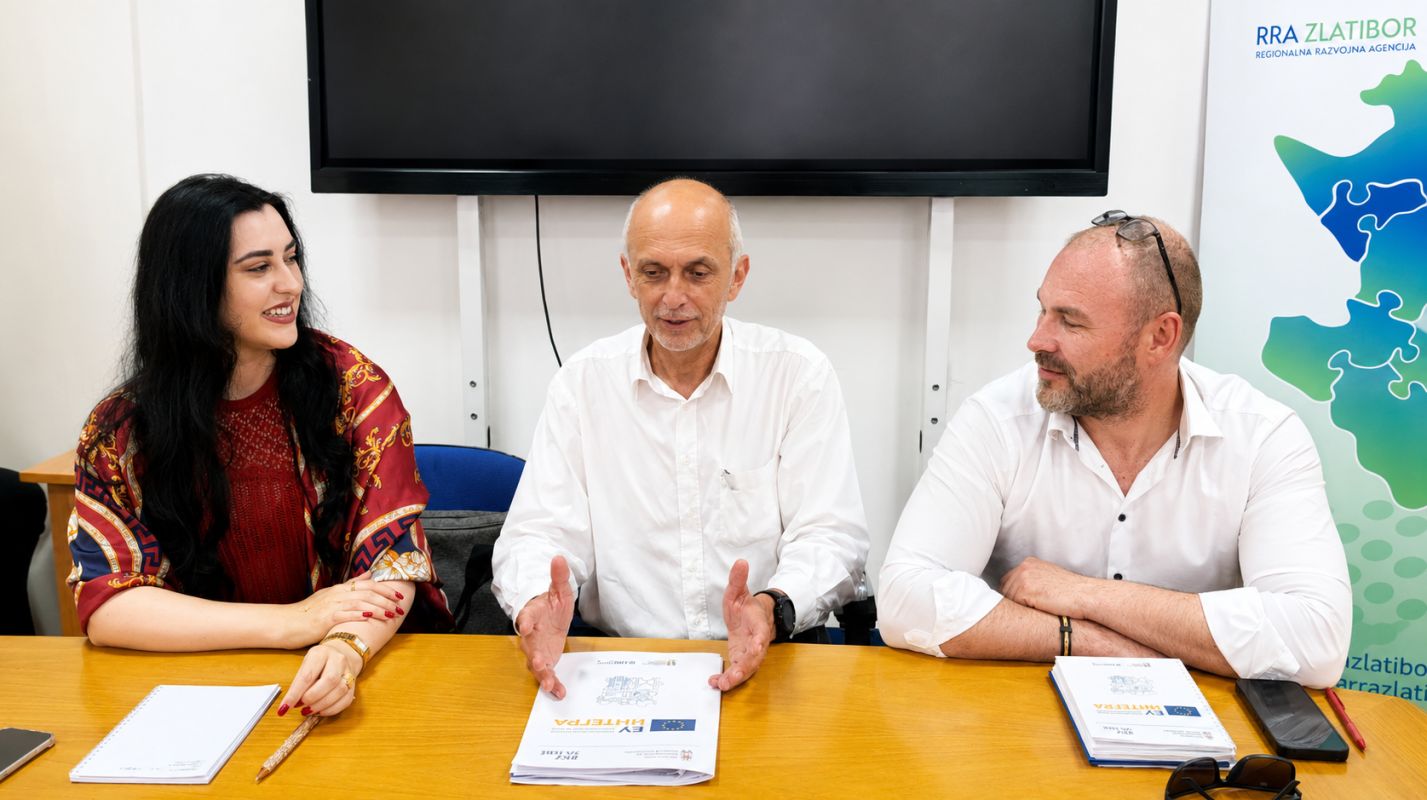
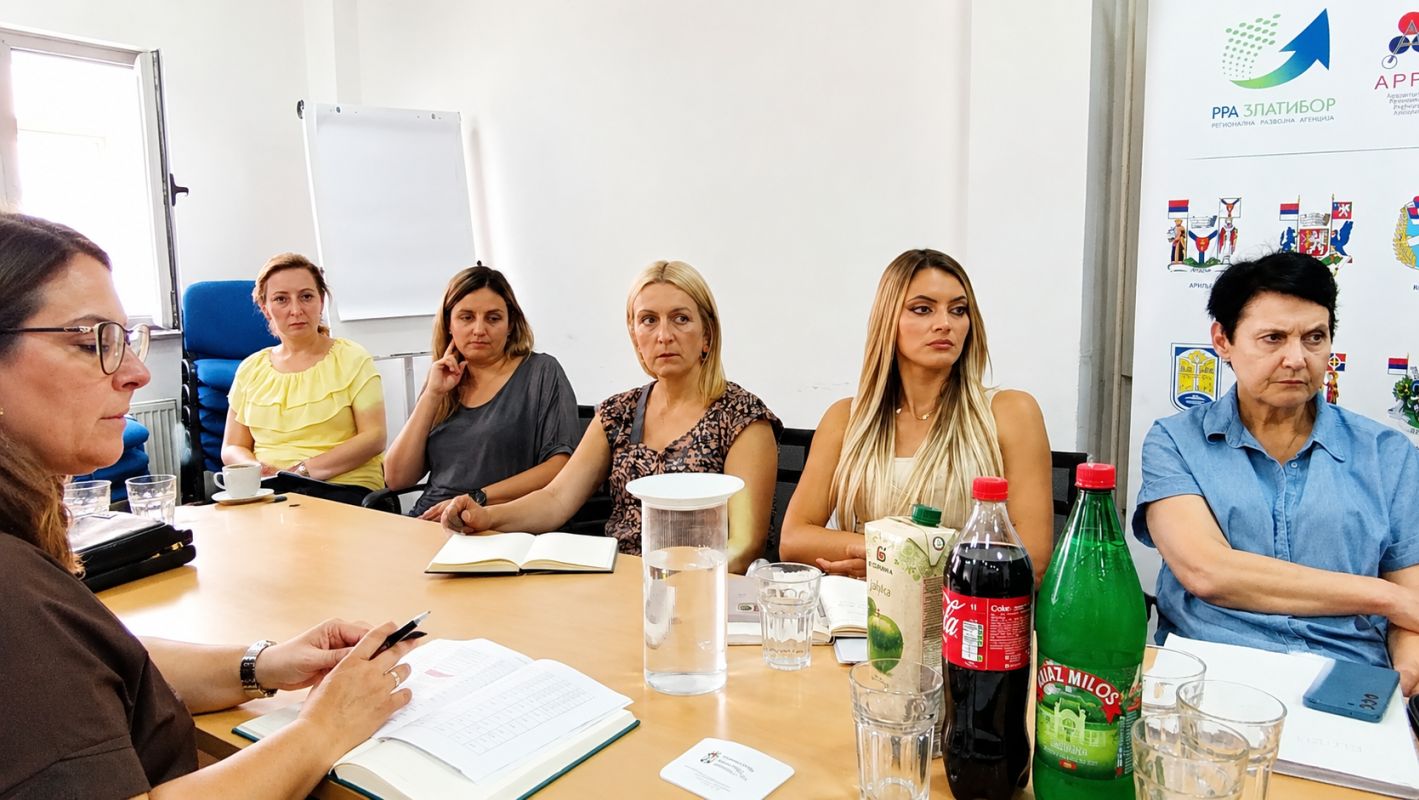
As part of the EU INTEGRA Programme, funded by the European Union and implemented by the Standing Conference of Towns and Municipalities (SCTM) and UNOPS in cooperation with the Ministry for European Integration, the kick-off meeting of the project “JOINT PATH2RESILIENCE – Prevention, Response and Adaptation to Climate Change in the Užice ITI Area” was held on Thursday, 16 July 2026, at the City Development Centre in Užice.
The meeting brought together members of the project team, coordinators appointed by the partner local self-governments, as well as representatives of the EU INTEGRA Programme at SCTM.
The kick-off meeting was also attended by Dr Nataša Stevandić from the Ministry for European Integration, Sector for Planning, Programming, Monitoring and Reporting on EU Funds and Development Assistance, representatives of the Zlatibor Regional Development Agency, and project teams from the partner local self-governments.
Integrated Planning of the Next Project Activities
Participants reviewed the activities to follow the signing of the Partnership Agreement and the transfer of funds. Particular attention was given to joint activity planning, partner coordination, preparation of the required documentation, public procurement, financial management, project monitoring, and communication and visibility activities.
An Integrated Approach to Climate Challenges
The JOINT PATH2RESILIENCE project aims to strengthen the capacities of local self-governments within the Užice ITI area for climate change prevention, response and adaptation.
The project is implemented by the City of Užice, the municipalities of Čajetina, Požega and Bajina Bašta, the Zlatibor Regional Development Agency, and the Ministry of the Interior of the Republic of Serbia. Through an integrated territorial approach, the partners jointly develop and implement activities that contribute to greater resilience of the territory to climate-related risks.
Project activities include measures aimed at increasing the resilience of both urban and rural areas, improving public spaces, strengthening preparedness for emergency situations, and promoting the efficient use of sustainable solutions. These efforts contribute to improving citizens' quality of life, protecting the environment, and supporting the long-term sustainable development of the entire area.
Next Steps in Project Implementation
In the coming period, the partners will work together to align project activities, prepare and submit the necessary documentation, and implement procedures in accordance with national legislation and the rules of the EU INTEGRA Programme.
It was agreed that particular attention would be paid to timely communication among partners, a clear division of responsibilities, and the active engagement of all team members throughout project implementation.
One of the first planned activities will be a public procurement workshop, scheduled for 20 July 2026 in Belgrade, providing partners with practical guidance for the proper implementation of procurement procedures and helping reduce the risk of irregularities during project implementation.
Knowledge Exchange and Capacity Building
A peer-to-peer workshop is planned for the autumn, providing an opportunity for partners and other stakeholders to exchange experience, practical knowledge and examples of good practice. This approach will contribute to strengthening capacities for project implementation and addressing implementation challenges more effectively.
Through the joint efforts of all project partners, JOINT PATH2RESILIENCE will contribute to strengthening the climate resilience of the Užice ITI area, improving public services, and creating a safer, greener and more sustainable environment for its citizens.
The EU Support to Integrated Territorial Development – EU INTEGRA Programme supports local self-governments in planning and implementing integrated territorial development in line with the principles of the European Union's Cohesion Policy.
Through the Programme's grant scheme, implemented by SCTM, five integrated projects have so far been supported, covering 14 local self-governments and 28 development interventions, with a total value of EUR 6.8 million, of which the European Union provides EUR 4.5 million in funding.