04/23/2021
International Conference "Code of Ethics for Local Government Officials in Europe and Serbia"
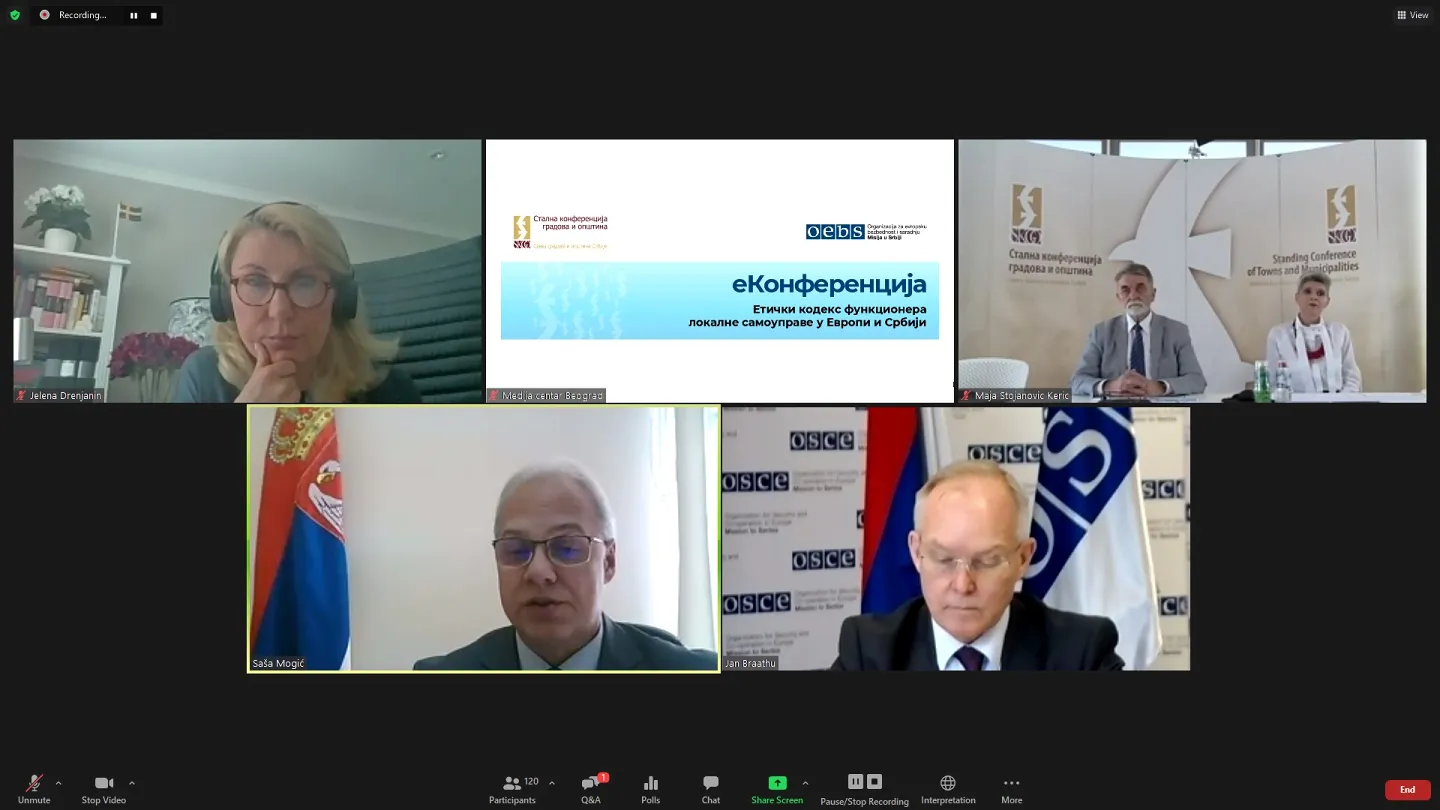
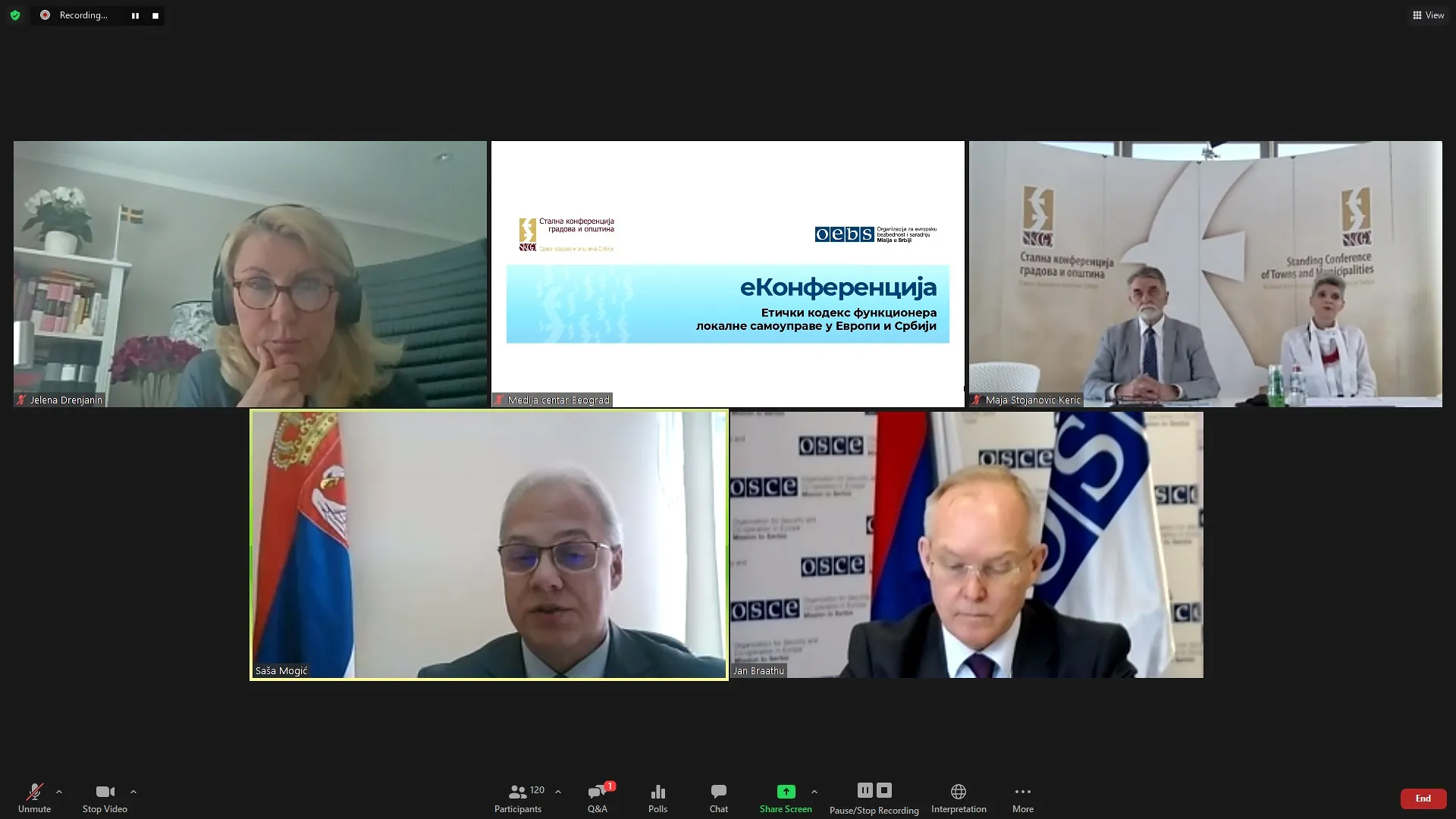
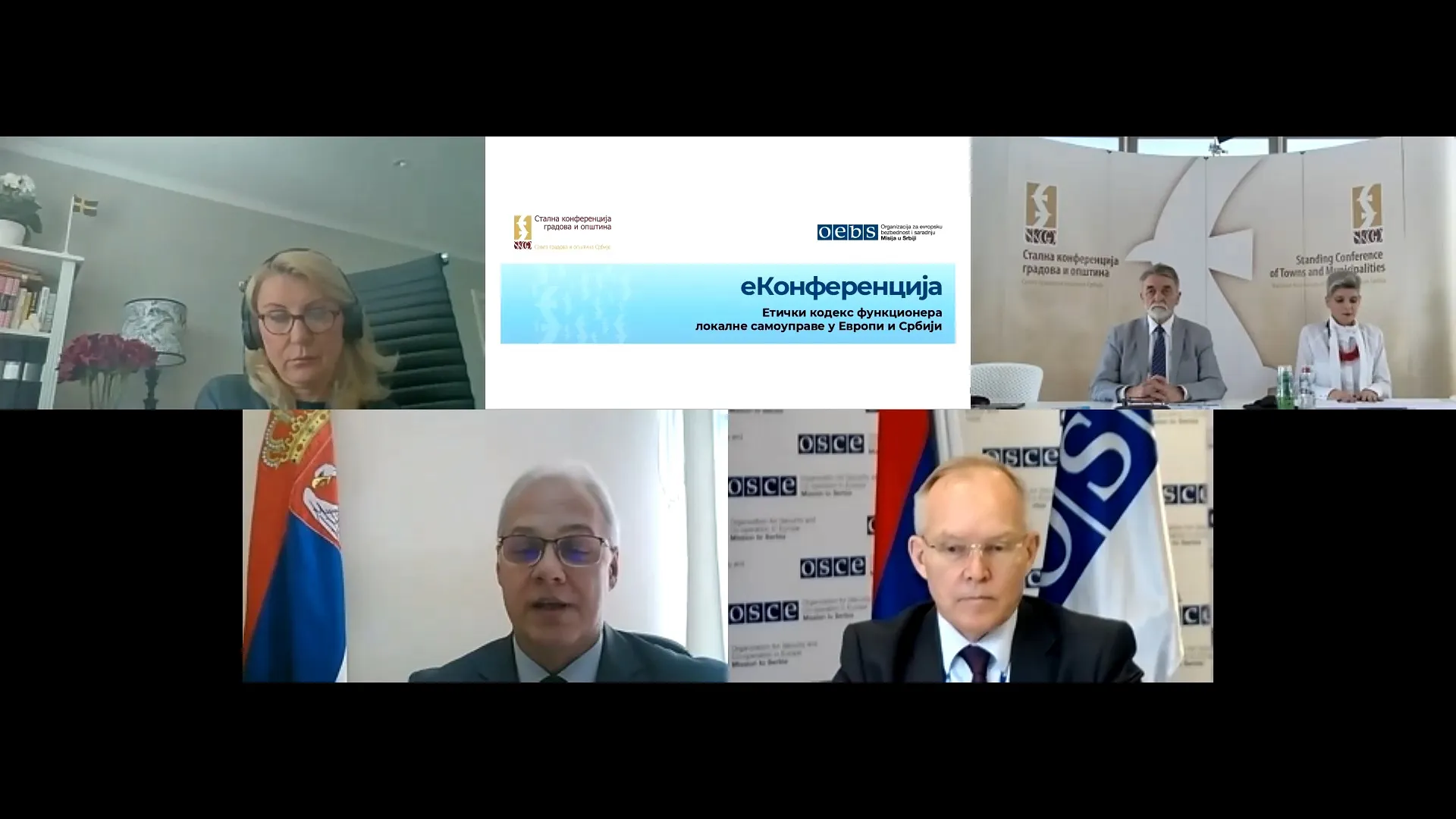
The international e-conference "Code of Ethics for Local Government Officials in Europe and Serbia" was held on April 21, 2021, through the ZOOM platform. This conference was organized by the SCTM in cooperation with and with the support of the OSCE Mission to the Republic of Serbia.
This event brought together more than 150 local government officials, who were addressed in the introductory part of the meeting by Sasa Mogic, Assistant Minister of Public Administration and Local Self-Government, Ambassador Jan Braathu, Head of the OSCE Mission to Serbia, Jelena Drenjanin, President of the Governance Committee of the Congress of local and regional authorities of the Council of Europe and the councilor of the municipality of Huding in Sweden, and Djordje Stanicic, Secretary General of the SCTM.
Sasa Mogic: The Ministry calls on local self-governments to adopt the Code of Ethics for local self-government officials
"For the Ministry of Public Administration and Local Self-Government this topic is of great importance, because without ethics and integrity there is no rule of law, nor full implementation of local self-government. The Ministry is responsible for drafting two very important documents - the Public Administration Reform Strategy for the period 2021-2030 and the Program for the Reform of the Local Self-Government System in the Republic of Serbia, in which the ethics and integrity of public office holders occupy a very important and leading place". These were the words with which the Assistant Minister opened the e-conference.
According to Mr. Mogić, the strategic commitment of the Ministry is to strengthen the transparency and integrity of public administration and to improve the ethical standards of both officers and officials.
Welcoming the adoption of the Code of Ethics of Local Government Officials by the SCTM Assembly, Mr. Mogic on behalf of the Ministry of Public Administration and Local Self-Government called on all cities, municipalities, and city municipalities to adopt it.
Jan Braathu: The integrity and responsibility of local officials strengthens public confidence in local self-government
"Public accountability is one of the basic principles to which all OSCE participating States have committed themselves. The OSCE's commitments state that, in addition to building democratic institutions, it is crucial to ensure that individuals working in public life adhere to certain professional and ethical standards", said Ambassador Braathu, Head of the OSCE Mission to Serbia.
According to Ambassador Braathu, adherence to the code of ethics in government and public life ensures service to the public interest. Also, the integrity and accountability of public office holders helps strengthen community trust.
The OSCE Mission to the Republic of Serbia is a long-term and reliable partner of the SCTM in the promotion and implementation of ethical standards for local officials, and with their support a new text of the Code of Ethics for Local Government Officials was developed, a Guide to the Code of Ethics and posters with the Code of Ethics. In this regard, Mr. Braathu pointed out that the Mission is ready to continue to support the promotion and implementation of this important tool for improving accountability and ethics at the local level, and called on local self-government units to adopt the Code.
"I am convinced that every local official will recognize the significance and value of the Code and will firmly adhere to its principles, having in mind the public interest, the interest of your local government and the well-being of all citizens", said the Head of the OSCE Mission to Serbia.
Jelena Drenjanin: The integrity of local officials is crucial for good governance at the local level
"Local officials serve the local community and are citizen-oriented in their actions. Their responsibility and integrity have a direct impact on strengthening citizens' trust in local self-government", said the President of the Governance Committee of the Congress of Local and Regional Authorities of the Council of Europe.
The Congress of Local and Regional Authorities and the Council of Europe are constantly promoting public ethics and preventing corruption at local and regional level. Digitalization and greater trust in public services led to the fact that in 2018, the Congress adopted a new European Code of Conduct for all persons involved in local and regional governance, which revised the 1999 Code - the President of the Governance Committee pointed out. According to her, the new European Code contains an explicit policy of integrity for responsibility, transparency, impartiality, non-discrimination, the right to a family, prevention of real and obvious conflicts of interest, but also provides guidelines related to public procurement, termination of employment and protection of personal data.
"The European Code of Conduct for all persons involved in local and regional governance contains a set of standards and principles of conduct for local officials and it is an important tool that contributes to integrity, but also to anti-corruption policy", said Ms. Drenjanin.
"The adoption of the Code is seen as a commitment, a reliable and responsible relation with the public, which promotes high standards of integrity, openness and transparency among local and regional policy makers", said the President of the Governance Committee of the Congress of local and regional authorities of the Council of Europe and the Councilor of the municipality of Huding in Sweden.
Djordje Stanicic: The Code of Ethics is an act of self-commitment of local government holders
"For the Standing Conference, this topic is of great importance, and we pay great attention to it. Back in 2004, 17 years ago, we drafted a Code of Conduct for local government officials, which was adopted by all our members, and following the development in this area, it was decided to draft a new Code", said the Secretary General.
Speaking about the importance of the Code, the Secretary General of the SCTM pointed out that this document is an act of self-commitment of local government holders and shows awareness of responsibility towards citizens and contains principles without sanctions in the true sense of the word, which ensures legality and trust.
The Secretary General of the SCTM called on local self-governments to adopt the Code of Ethics and pointed out that "in addition to the adoption of the Code itself, it is very important to form working bodies to monitor its implementation." The work of the working bodies is, among other things, based on strengthening the regulatory significance of the Code, raising the awareness of local officials and citizens, and improving transparency, accountability and trust in good governance at the local level".