11/19/2025
53rd SCTM General Assembly – Two Decades of Cooperation Between the Swiss Confederation and SCTM
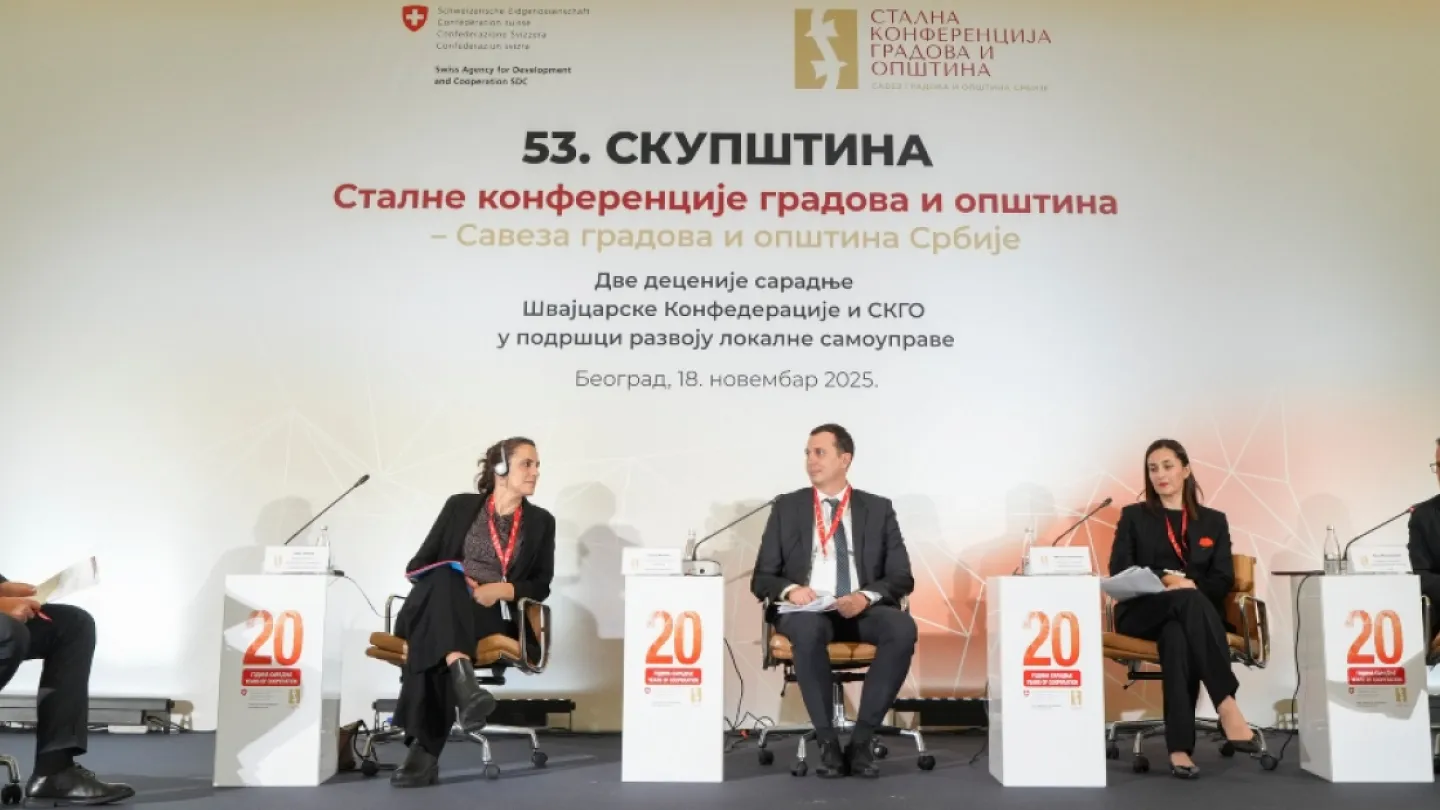
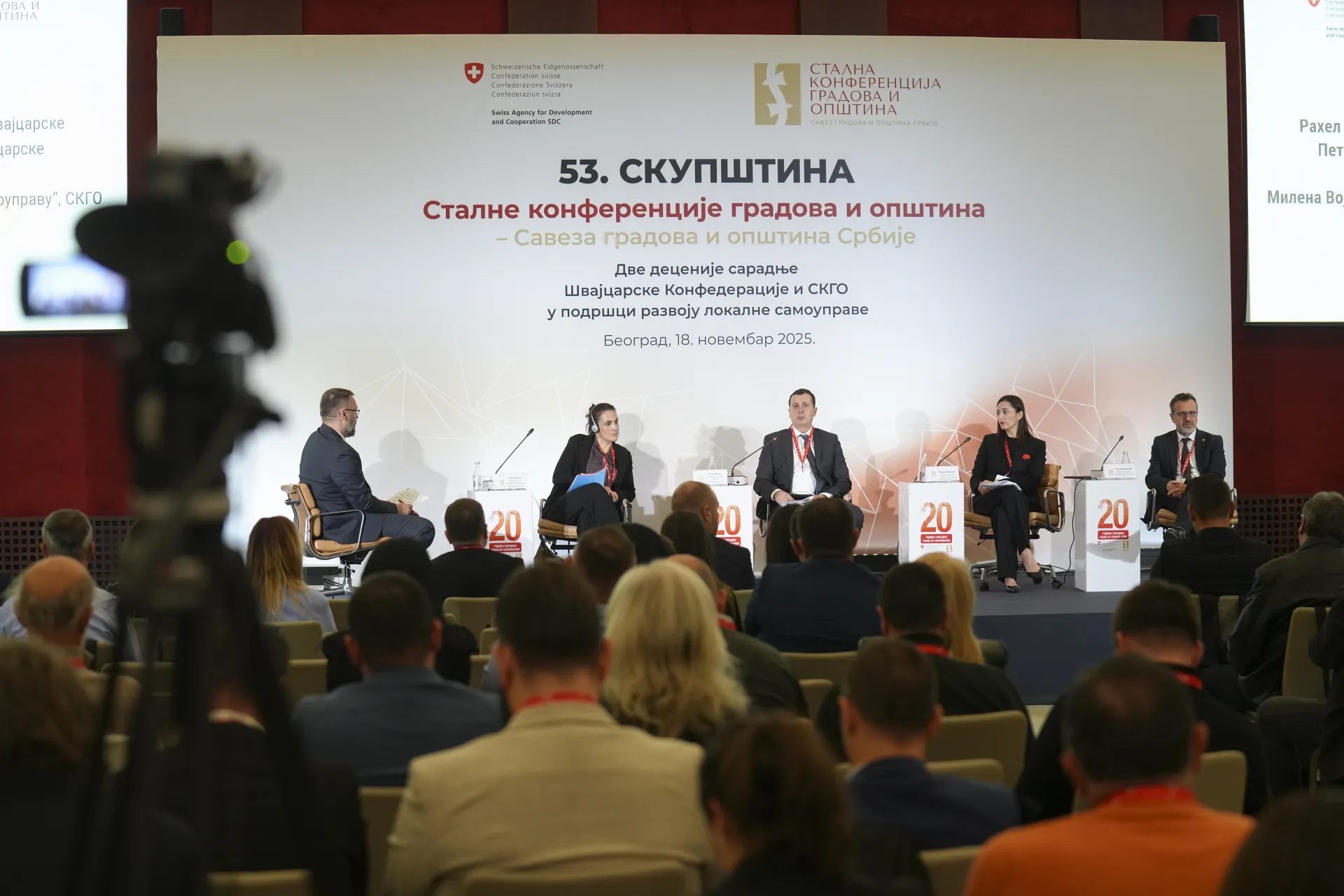
A special part of the programme of the 53rd General Assembly of the Standing Conference of Towns and Municipalities (SCTM) was dedicated to presenting the twenty-year cooperation between SCTM and the Swiss Confederation, through a panel discussion featuring representatives of the Swiss Embassy and SCTM.
Six Project Phases – Six Success Stories
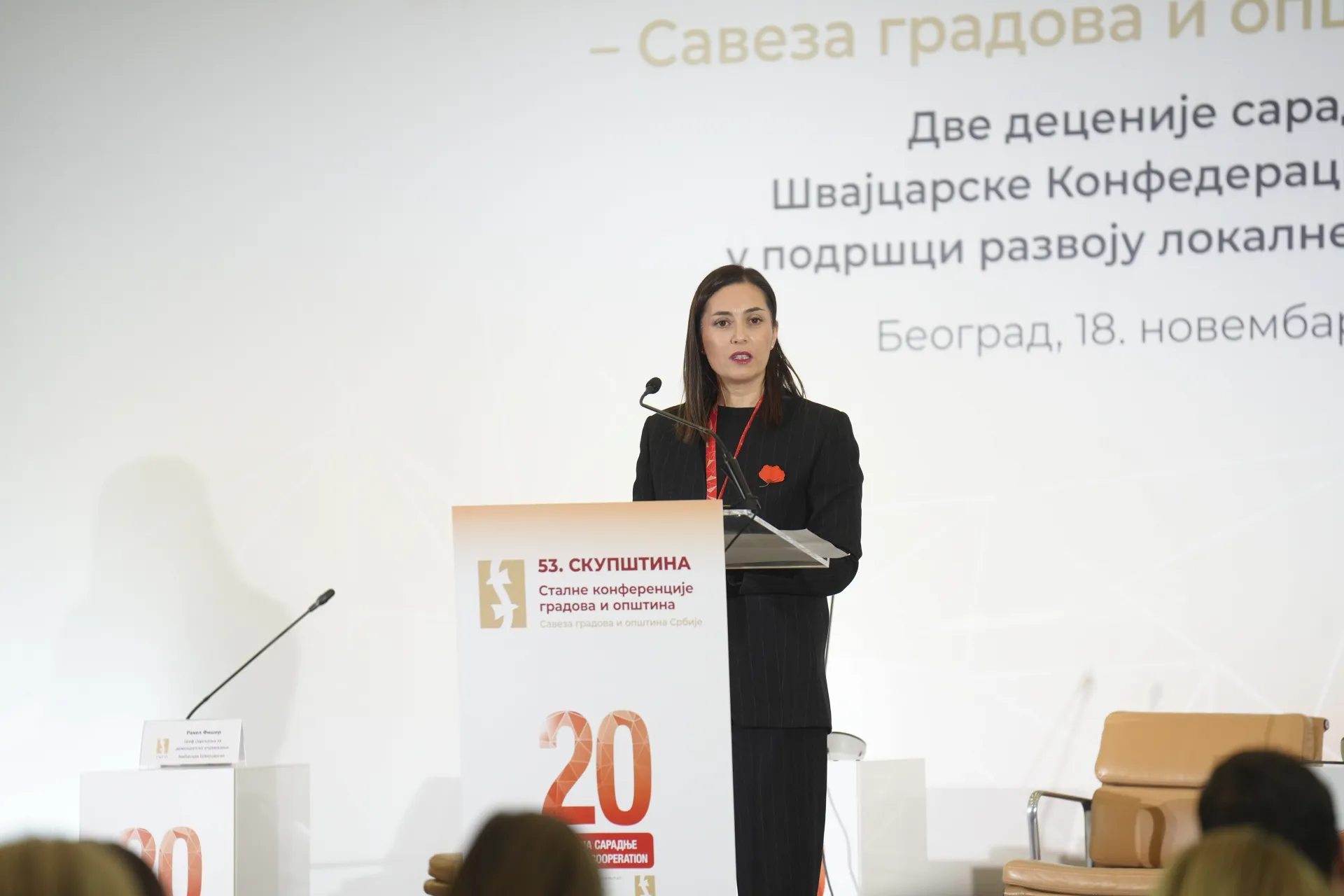
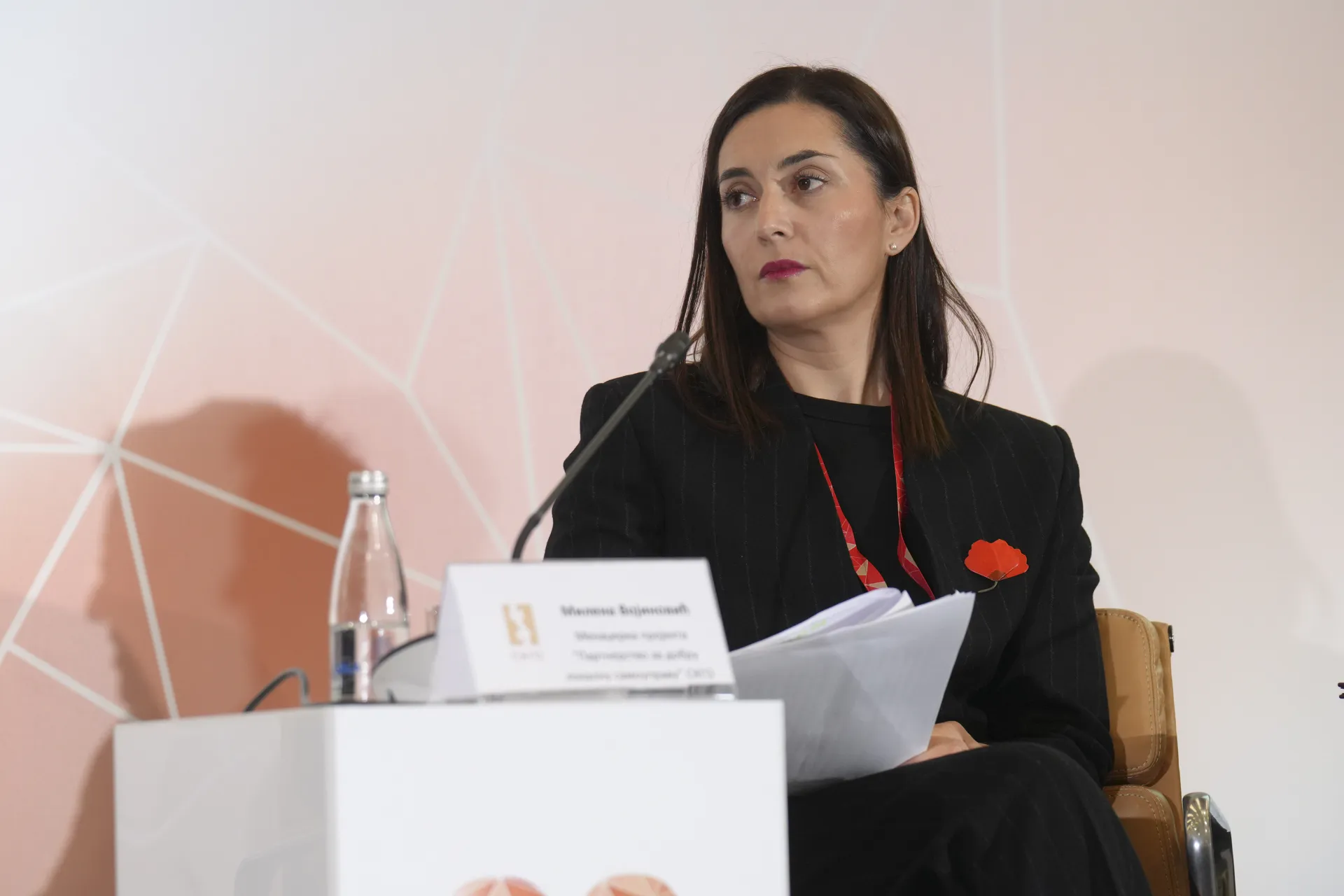
The discussion was opened by Milena Vojinović, Project Manager of “Partnership for Good Local Governance” at SCTM, who presented the modalities of the long-term cooperation between SCTM and the Swiss Confederation.
Vojinović emphasized that this cooperation unfolded through nine implemented projects, beginning in 2005 with two projects dedicated to improving citizen participation in Serbia. These were followed by three phases of a project focused on institutional development and support to SCTM, while the currently active one is the “Partnership for Good Local Governance” project.
“In addition to the projects implemented independently by SCTM, there are three more projects supported by the Government of Switzerland that SCTM carried out in partnership with other organizations. These include two projects dedicated to strengthening the principles of good governance at the local level, as well as a project focused on creating a favorable business environment through regulatory reform, which we implemented together with the organization Optimus,” Vojinović noted.
Speaking about the key phases of cooperation with Switzerland, she explained that the first two phases, implemented successively and focused on strengthening citizen participation, were initially oriented toward identifying what needed to be improved within the legal and strategic framework in order to create the necessary conditions for participation. In the second phase, the promoted concepts began to be applied in practice, and many citizens were, for the first time, introduced to the possibility of participating in decision-making in their local communities.
“After this, the third phase of cooperation with the Government of Switzerland begins, lasting from 2010 to 2022, and this is the key segment of cooperation with SCTM. It represents the transformation of our organization into what SCTM is today. These projects, implemented in three phases, were aimed at strengthening the institutional capacities of our organization,” Vojinović stated.
She highlighted several results: the Local Self-Government System Reform Programme, the first strategic document for local self-government in Serbia; significant amendments in 2018 to the Law on Local Self-Government that expanded inter-municipal cooperation, clarified the functioning of local communities, and introduced mandatory public hearings; improvements in administrative service delivery through the adoption of the Law on General Administrative Procedure in 2016; and the adoption of the Law on Local Government Employees, which laid the foundation for establishing a professional and modern local administration.
“Over the years, SCTM has worked — and continues to work — on strengthening the financial stability of local governments. Across these three project phases, over a period of 12 years, we succeeded, through various advocacy activities, in preserving or increasing local government revenues by around 100 million euros. Since 2014, the payroll tax has become one of the most important sources of income for local governments; since 2015, the Commission for Local Self-Government has been re-established; the registration of public property for towns and municipalities has been facilitated; and through the introduction and continuous support for programme budgeting, more than 90 towns and municipalities now plan their budgets in line with programme-based objectives,” she underlined.
She added that one of the most significant forms of SCTM’s support to towns and municipalities has been the development of model documents and manuals widely used in practice, contributing to the standardisation of procedures and facilitating the work of local officials. She also emphasized that SCTM is an accredited training provider in the system of professional development of local government employees and has established a mechanism of expert networks, positioning itself as a national centre of expertise for local governance and public administration.
“Thanks to this, since 2022 we have entered a new type of cooperation with the Government of Switzerland through support for the implementation of strategic goals within the Partnership for Good Local Governance programme. Over these three years, we started cooperation with the Ministry of Public Administration and Local Self-Government (MPALSG) on preparing a new local self-government reform programme, established a national mechanism for supporting inter-municipal cooperation, and included SCTM’s proposals in the Law on Communal Services. The Decree on the One-Stop Government Service Centre was adopted, we continued promoting and supporting towns and municipalities in adopting the Ethical Code for Officials, and supported the initiative for awarding Best City and Municipality Administration. We also moved toward electronic centralised records management and the entry of procedures into the Register of Administrative Procedures,” Vojinović said.
A Conversation with Purpose – SCTM as a Reliable Partner of the Swiss Government
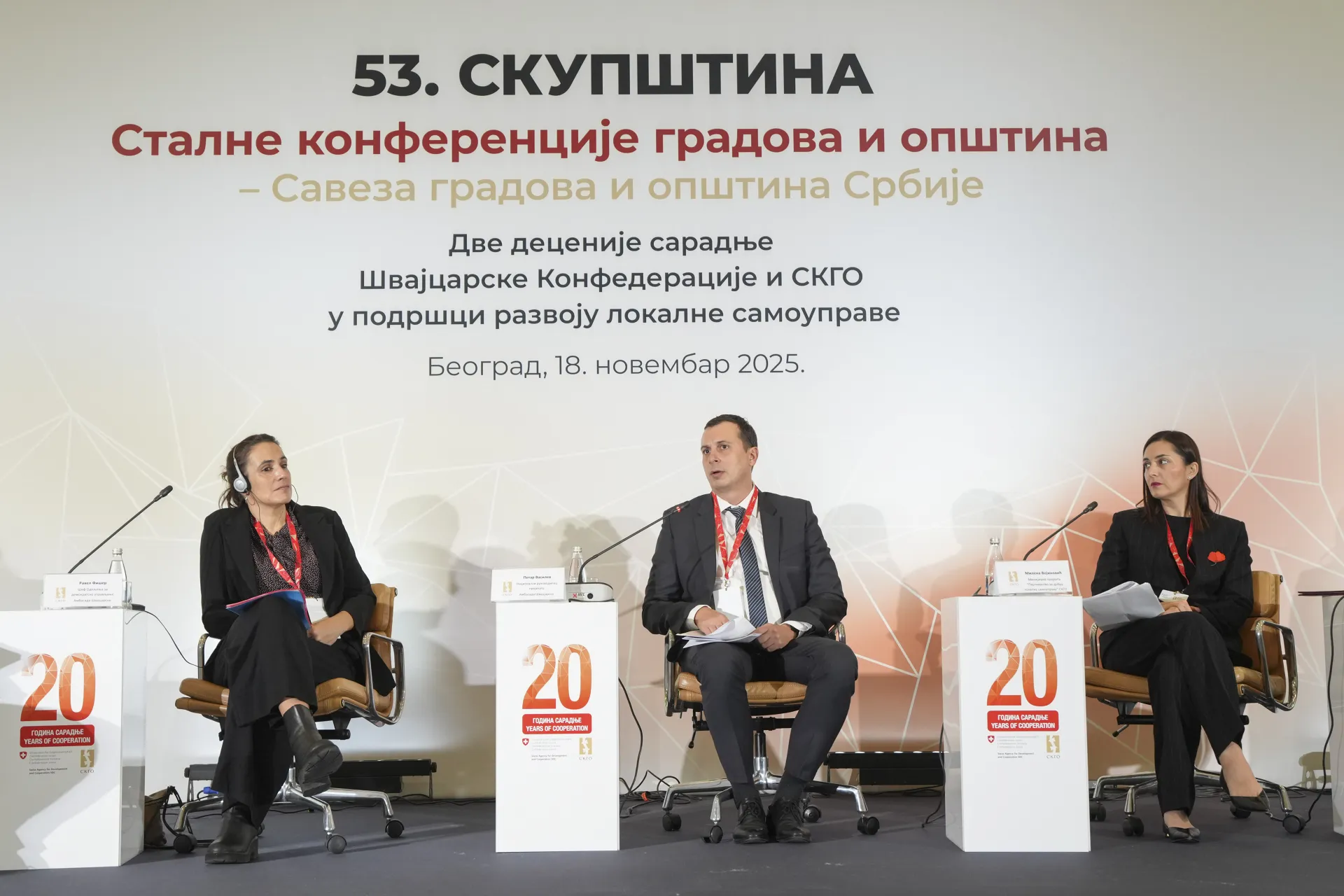
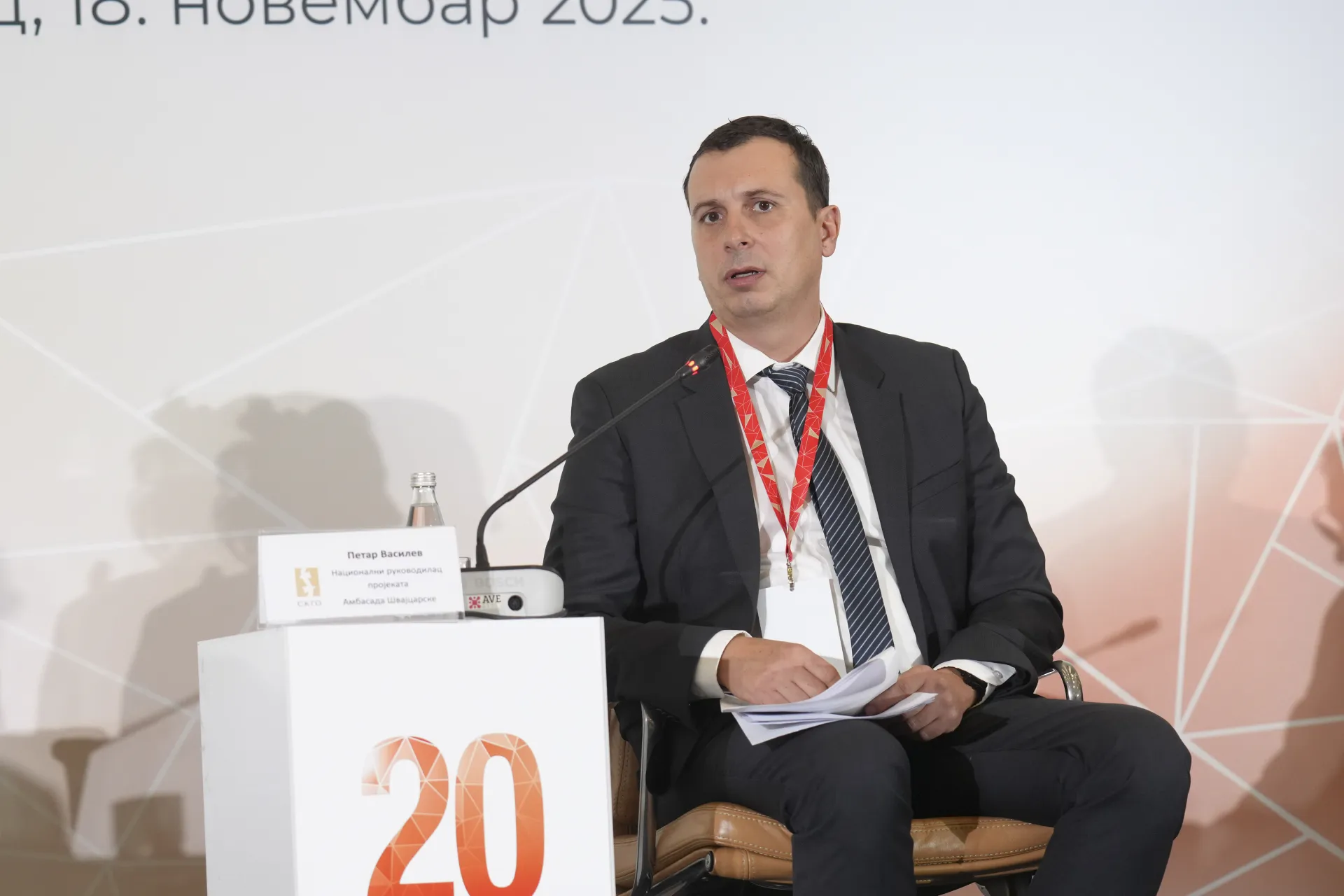
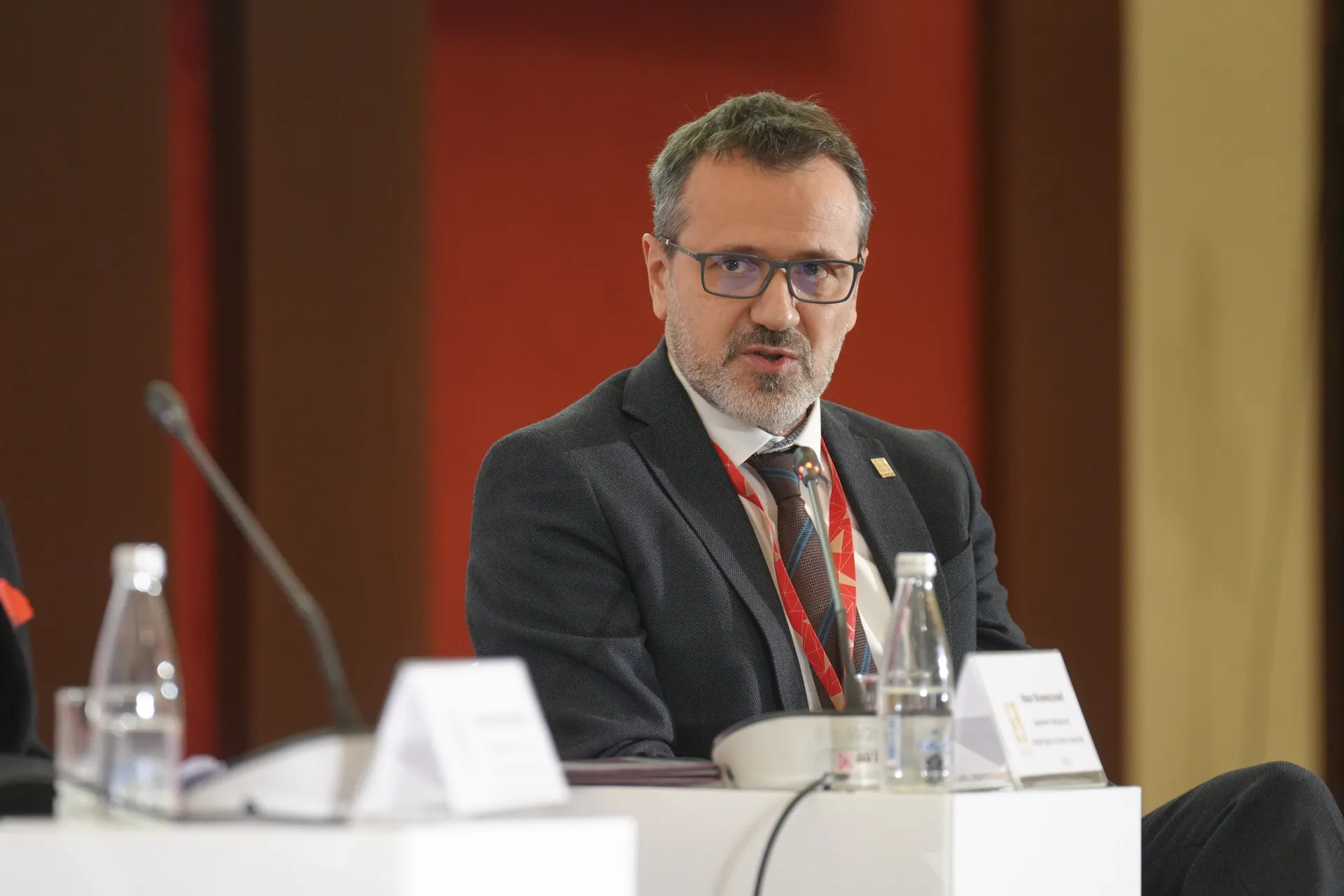
A panel discussion on cooperation between SCTM and the Government of Switzerland featured Rahel Fischer, Head of the Department for Democratic Governance at the Swiss Embassy; Petar Vasilev, National Project Officer at the Swiss Embassy; and on behalf of SCTM, Ivan Milivojević, Deputy Secretary General, and Milena Vojinović, Project Manager of “Partnership for Good Local Governance.”
From Early Citizen Participation to Building SCTM and Local Government Capacities
Milivojević highlighted that cooperation with the Swiss government began in an area that is a strong tradition in Switzerland — citizen participation in local decision-making. He noted that during the SFRY era, Serbia had well-developed mechanisms such as referendums, citizens’ gatherings, and community councils, which addressed local communal, cultural, and sports issues, but that these practices diminished during the crises of the 1990s.
“It was necessary to restore citizens’ trust in local decision-making mechanisms and involve them once again. Switzerland, known globally for this, naturally offered its support. We started in 2005, and the first phase focused on identifying optimal mechanisms for citizen participation and proposing amendments to legal solutions — many of which were incorporated into the 2007 Law on Local Self-Government. Guidance documents and trainings were crucial, and we worked directly with six municipalities, involving over 10,000 people. There was also a fund of 500,000 Swiss francs that supported the implementation of local projects,” Milivojević explained.
According to Petar Vasilev, when the cooperation began, Serbia was strongly oriented toward developing local democracy. Switzerland — a donor traditionally focused on the local level, with extensive experience in direct democracy and decentralisation — decided to partner with SCTM to help build trust between citizens and local governments in selected municipalities.
“The guiding idea was that the social contract between citizens and local governments lies at the heart of every democracy, which is why such a project was chosen as the start of cooperation. The first two project phases yielded strong results — we heard testimonies from citizens enthusiastic about having the opportunity to participate in local decision-making. The Swiss Cooperation Office recognised SCTM as a reliable partner for driving change at the local level. This led to the next step: entering institutional cooperation with SCTM, allowing us to support the development of all municipalities and cities in Serbia together. We then moved into a phase focused on strengthening the association itself, its capacities, tools, and the ability to represent local interests at the national level,” said Vasilev.
Vojinović added that the success of the civic participation projects gave SCTM the confidence to assume greater responsibility and become a bridge between local governments, ministries, and the Government of Serbia.
“We wanted to help ensure that the needs and challenges of towns and municipalities were articulated accurately and translated into concrete, sustainable outcomes. At that time, we also noticed that information from the local level was a missing resource for national-level policymaking. SCTM played a key role here. More than 60 national-level laws or policies included the positions of SCTM. All towns and municipalities had the opportunity to receive support through various activities carried out under these projects,” she said.
Vasilev commended SCTM for its results achieved since 2010, adding that local governments had undergone a kind of accelerated evolution: services were of higher quality and local authorities had become closer to citizens.
“This is partly the result of SCTM’s readiness to adapt to citizens’ priorities and its commitment to that goal. Many achievements could be listed, but I would emphasise three. First, the programme and strategic framework developed by SCTM together with the competent ministry and other actors — including the improved framework for inter-municipal cooperation after 2018 and the first strategic document guiding reforms in this area. Second, administrative, financial, and planning capacities of towns and municipalities have significantly strengthened. For example, the transfer of public property to local ownership is worth billions of euros — it is difficult to even quantify. Third, SCTM has grown into a modern association capable of responding to the priorities and interests of local governments. We have presented this cooperation as an example of good practice both regionally and internationally,” Vasilev stated.
Local Needs Come First
Milivojević emphasized that joint cooperation has shown the importance of timely and needs-based support — accessible to all local governments to the greatest extent possible and provided over a longer period of time.
“Since 2000, Serbia has been in a period of intensive reforms, particularly in the context of EU accession. Thanks to the support from the Government of Switzerland, we were able to respond to local needs in a timely manner — whether regarding new laws, the preparation of tools, training, model documents, handbooks, or on-the-ground support. The flexibility of the Swiss government enabled us to act quickly. It was crucial that we bridged financial gaps in projects. A good example is the pandemic period, when we enabled SCTM to switch to online work in just two months and ensured that all local governments could operate under those conditions,” Milivojević said.
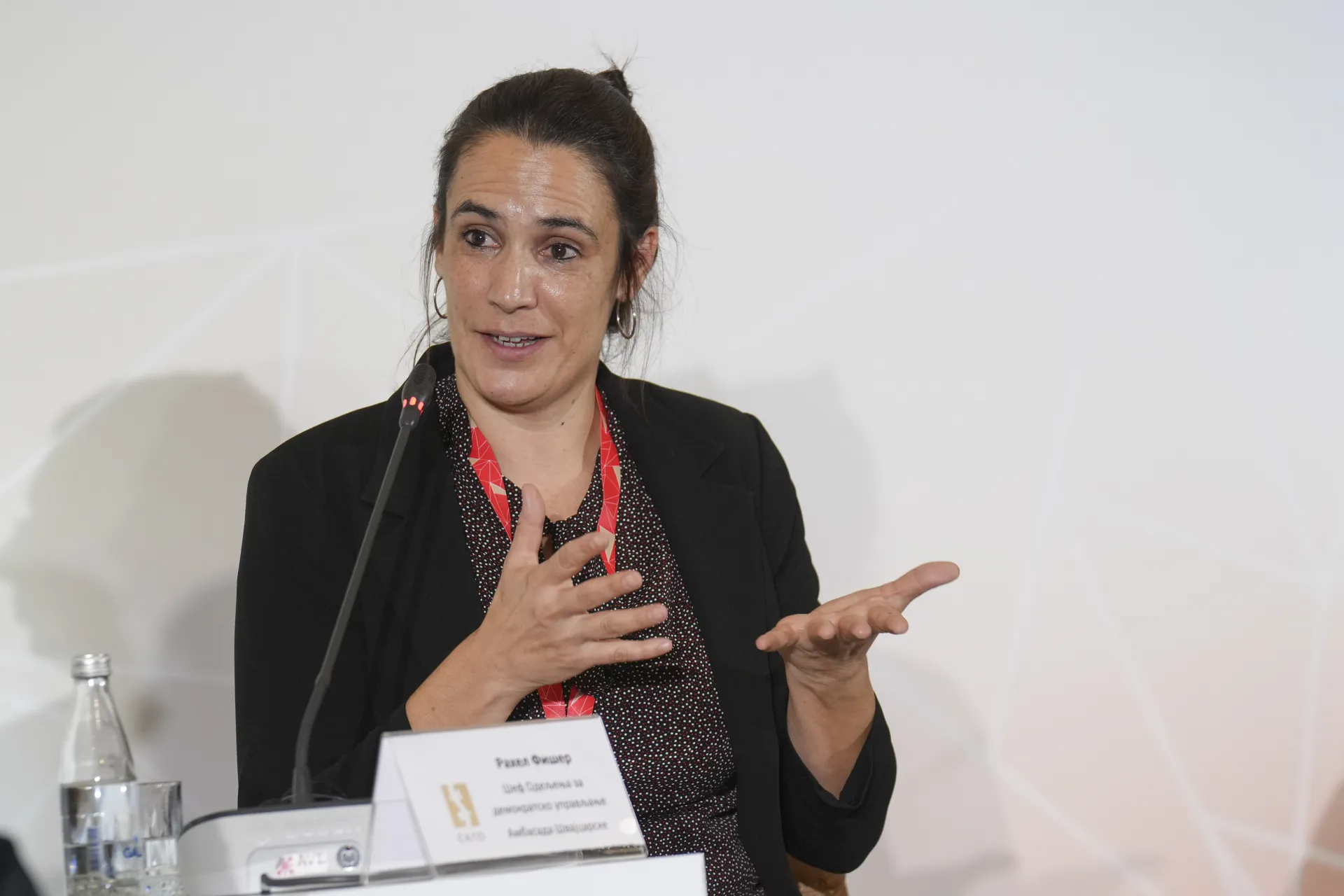
Rahel Fischer, Head of the Department for Democratic Governance at the Swiss Embassy, highlighted three key aspects: “building bridges,” balance, and regular consultations.
She explained that in Switzerland, local authorities are always at the centre of governance because the system is highly decentralised.
“We firmly believe that people care more about public funds when they relate to the park where their children play or the hospital their mother needs to visit. You are much more connected to public affairs if they affect your daily life. That’s why we believe in local governance. Unlike Switzerland, Serbia does not have cantons — you have a central government and municipalities. It is difficult for the central authorities to communicate with all local governments directly, which is why someone needs to act as a bridge. This is why ‘building bridges’ is essential — sometimes very little time remains for implementing regulations, and local governments need assistance,” Fischer said.
Regarding balance, she pointed out that “municipalities differ greatly — from Belgrade to small rural areas — in size, geography, and demographics, and so do their challenges.”
“The third important aspect is consultations. Over the past 20 years, Switzerland has invested a great deal in developing consultation mechanisms and using opportunities provided by digitalisation,” she added.
Vojinović emphasized that public administration is not detached from real life and must constantly adapt. Local governments face even greater pressure because they are directly connected to citizens and require increasingly faster improvements.
“I wouldn’t call it a challenge, but there is still a need for continuous support — especially system-level support. Even though capacities are much stronger and many systems are in place, there is still room for assistance. We continue to monitor the situation, identify bottlenecks, and find ways to overcome them. Key issues remain the financing of local governments, fiscal decentralisation, and ensuring financial stability. There are also the challenges of digitalisation, inter-municipal cooperation, and building capacities for new tasks assigned to local governments. Another important area is the increased use of available EU funds,” she said.
Fischer added that over the past 20 years, significant progress has been made: waiting times for key local services have been reduced, and digitalisation has enabled better connectivity with various services.
“We see success in this area and believe it is important to stay on this path. Indicators we monitor also show improvement in good governance, and citizens are more satisfied. Still, local authorities should invest more in reliability and transparency to continuously build trust. There is always room for more reforms, but that depends on policymakers. Perhaps further decentralisation of additional services and strengthening inter-municipal cooperation could be considered. It should also be clear who is responsible for what — what falls under local authorities and what under the central government,” she explained.
Continuation of Cooperation in Line with the SCTM Strategic Plan 2026–2030
Speaking about future cooperation, Milivojević highlighted the new strategic document of SCTM for the period 2026–2030, developed with the participation of SCTM members and national and international partners.
“The Strategic Plan is being developed in parallel with the Local Self-Government Development Programme, which we are preparing together with the line ministry where there is thematic overlap. Together, we are preparing a document that will guide us in the coming years. It will be aligned with Serbia’s development policies,” he said, adding that the ratification of the European Charter of Local Self-Government, further decentralisation, and the development of inter-municipal cooperation are expected. Human resources remain a major challenge, and the strategic plan also covers other fields such as social services, education, and more.
Fischer added that the SCTM Strategic Plan is a strong and well-prepared document, particularly valued because it was developed transparently and through consultations.
“We will continue to strongly focus on local governance. From our perspective, this is a social contract between citizens and local authorities, and that trust must be built continuously. I look forward to our future cooperation,” Fischer concluded.